Insights
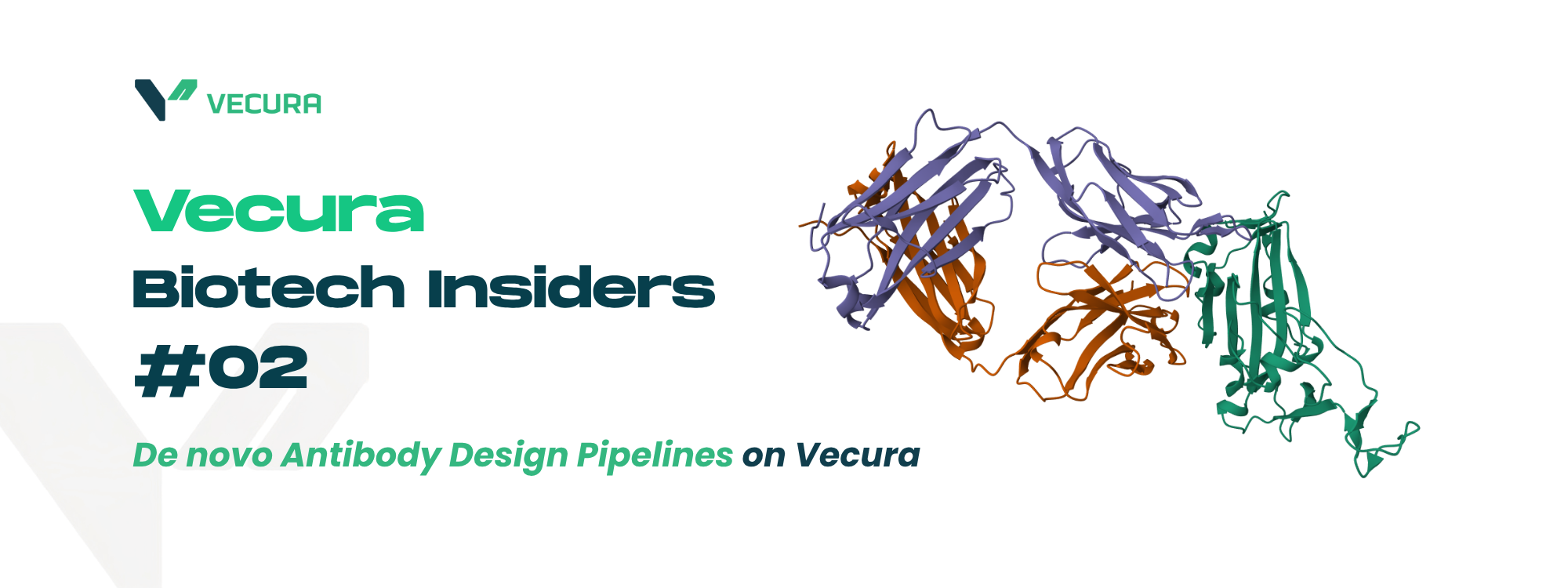
Vecura Biotech Insiders #02: De novo Antibody Design Pipelines on Vecura
In this second edition of Vecura Biotech Insiders, we highlight a workflow shared with the Vecura team by Tony 阮进成 during the support process.
Insights
Research analysis, industry perspectives, and deep dives on AI for life science discovery.
Insights
In this second edition of Vecura Biotech Insiders, we highlight a workflow shared with the Vecura team by Tony 阮进成 during the support process.
Insights
How the Vecura platform runs Boltz-2.1 through the API as the structure-validation engine inside a multi-model design pipeline, folding nine designed sequences with ten sampled models each and turning per-structure confidence into a triage signal for what to carry forward.
Insights
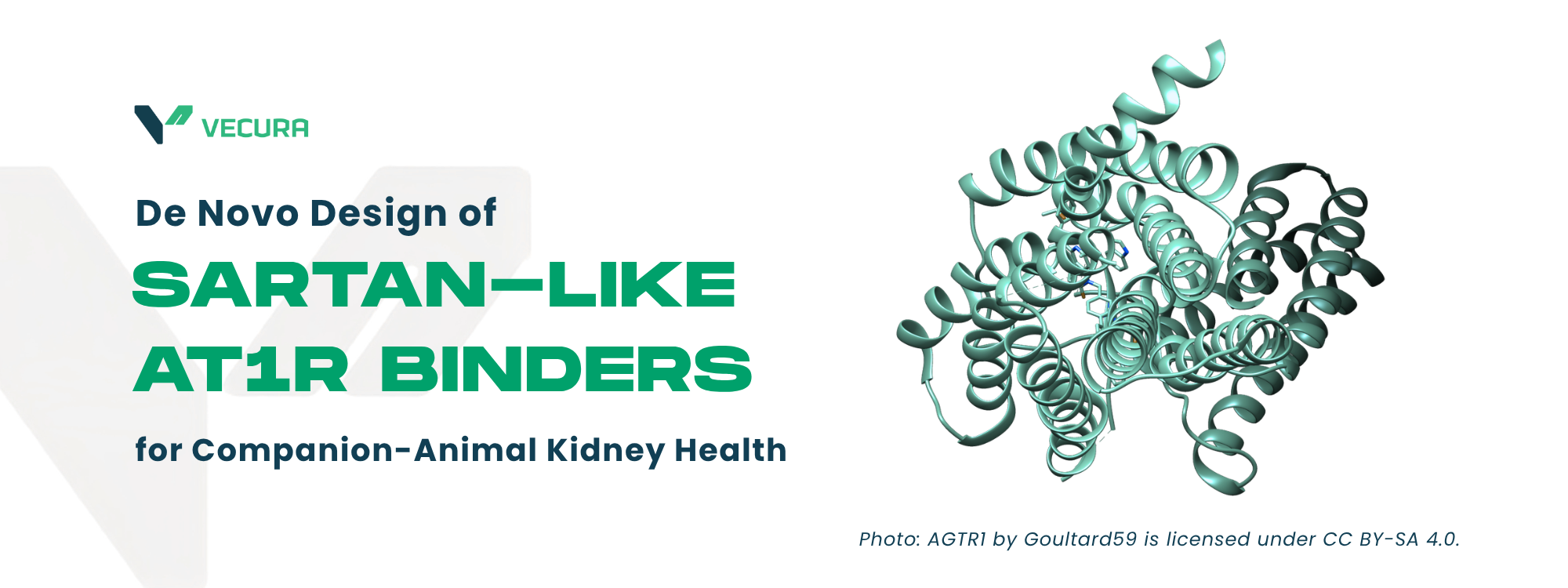
A Vecura workflow, chaining generative small-molecule design, structure-based docking, ADMET prediction and toxicophore-constrained redesign against the angiotensin II type 1 receptor. What the platform surfaced was not a drug candidate but something more useful, a quantified account of the potency-safety tradeoff that governs this chemotype.
Insights
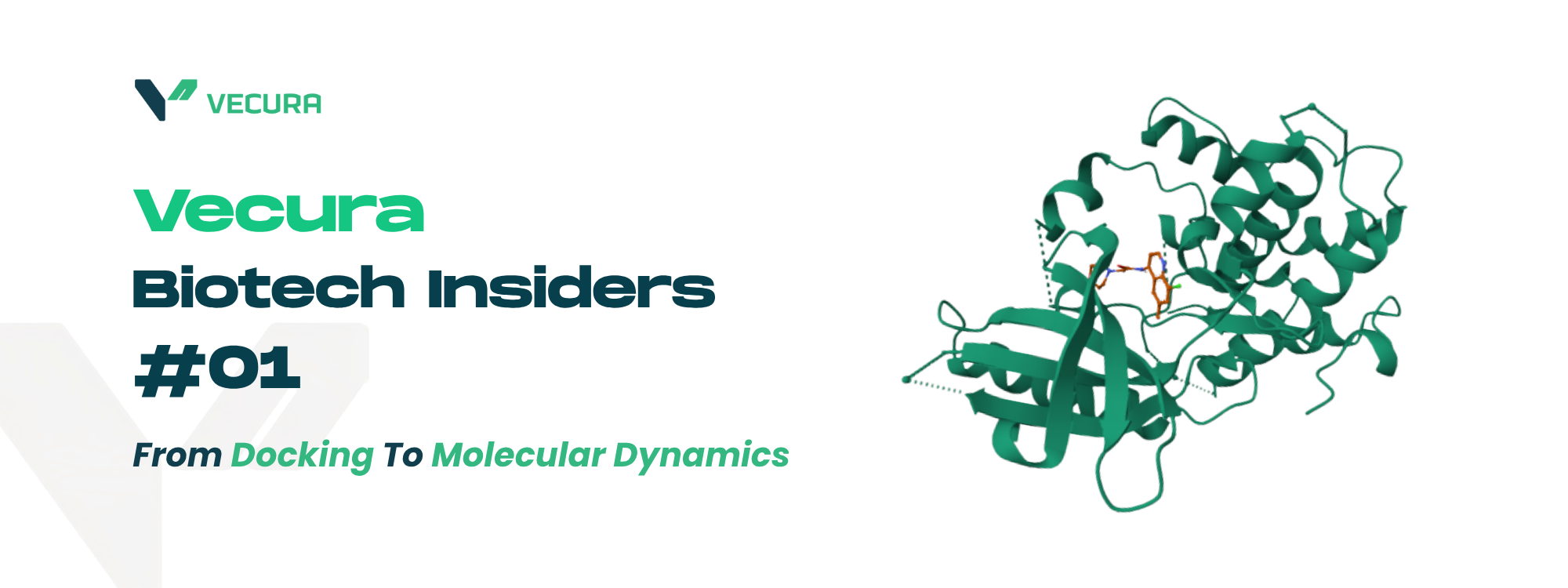
A community workflow example using AutoDock Vina and GROMACS on Vecura
Insights
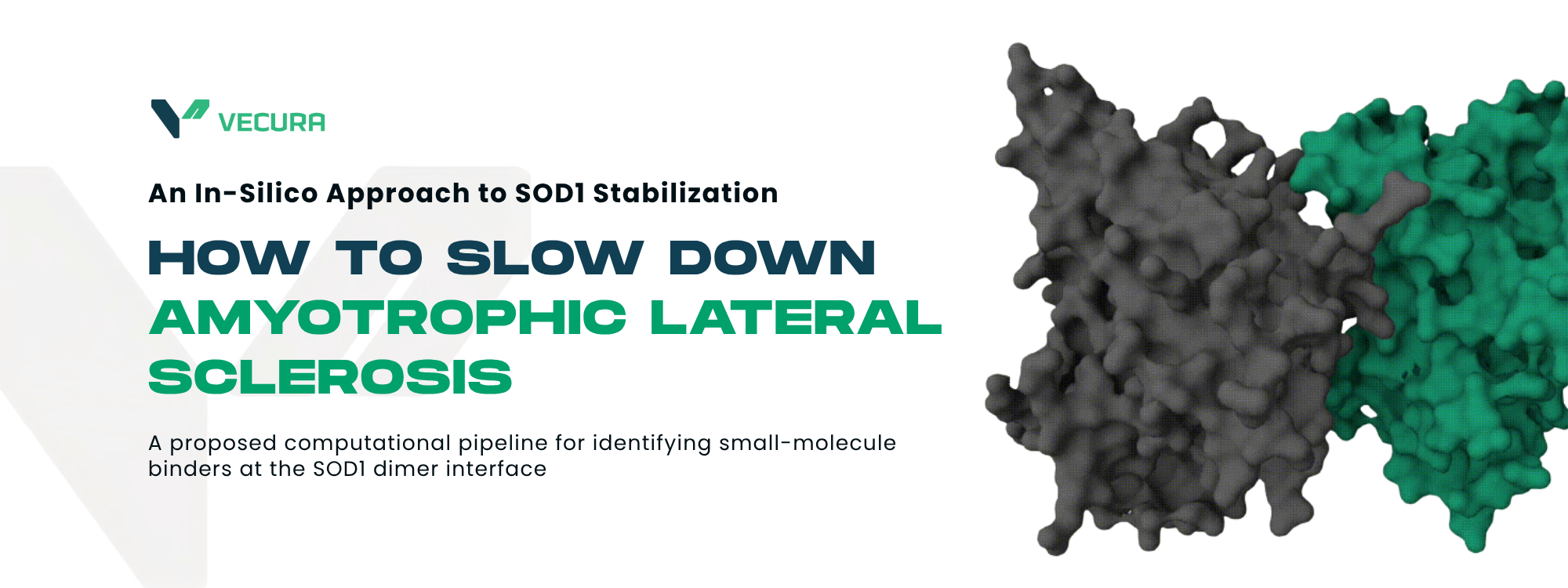
A proposed computational pipeline for identifying small-molecule binders at the SOD1 dimer interface
Insights
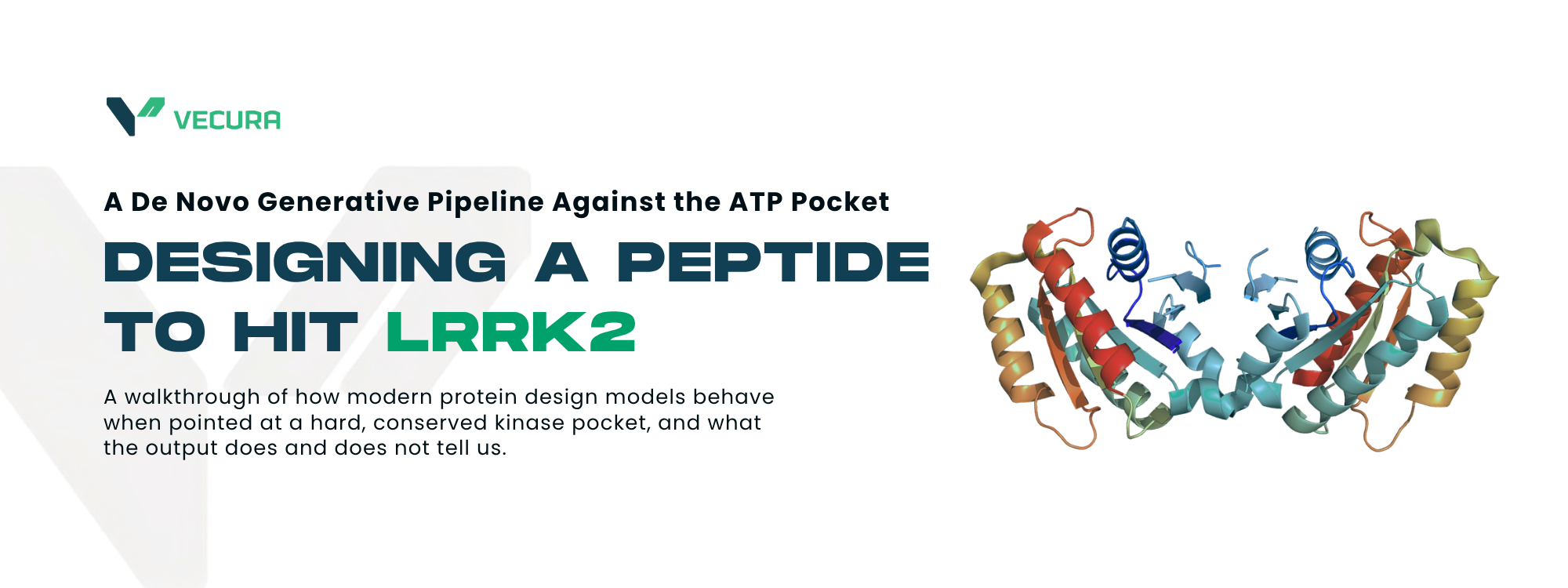
A walkthrough of how modern protein design models behave when pointed at a hard, conserved kinase pocket, and what the output does and does not tell us.
.png)
Insights
Covalent inhibitors occupy a unique space in drug discovery. By forming irreversible interactions with target residues, they can achieve sustained target engagement and prolonged pharmacological activity beyond what is often possible with non-covalent ligands. However, optimizing covalent scaffolds presents a distinct challenge: favorable binding affinity alone is insufficient. Productive activity depends on precise geometric alignment between the reactive warhead and the target nucleophile.
.png)
Insights
Biomedical agents are different from general chatbots. They are expected to understand scientific questions, retrieve biomedical knowledge, plan workflows, call computational tools, analyze outputs, and provide safety recommendations. Because of this, evaluating only the final answer is not enough.
Insights
AlphaFold, developed by DeepMind, is an AI system that predicts protein structures from amino acid sequences with high accuracy using deep learning, significantly advancing protein folding research. Its impact spans drug discovery, disease research, and synthetic biology, and its open-access nature has fostered global scientific collaboration—making it a landmark example of AI's potential to tackle complex biological challenges.