ユースケース
創薬やライフサイエンス研究チームによる実際のワークフローと結果

ユースケース
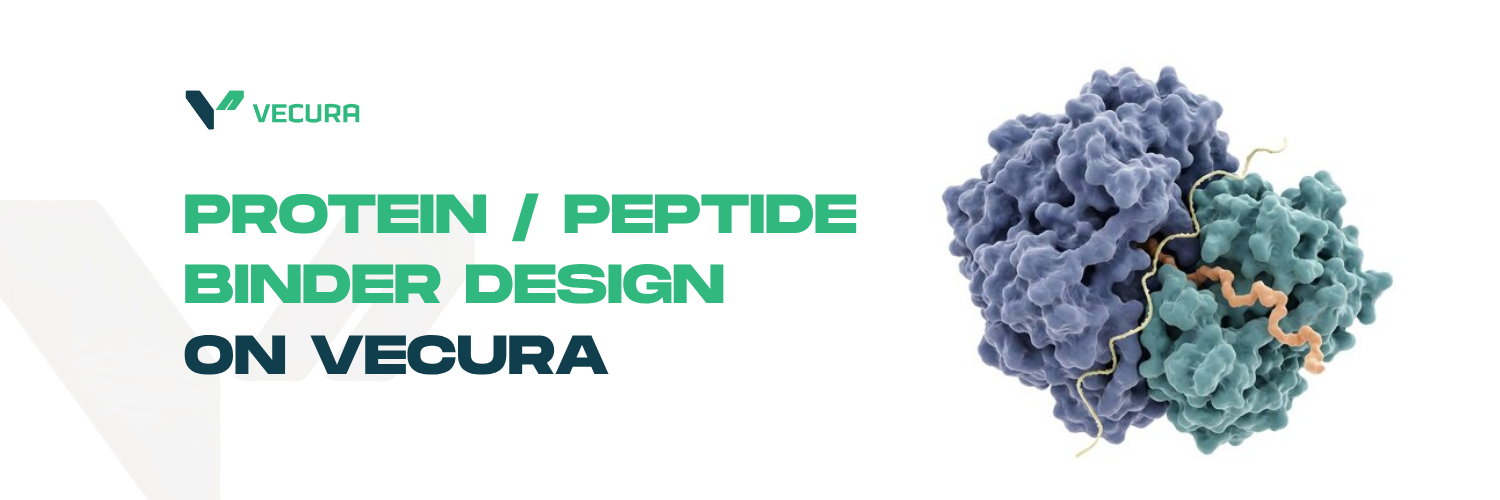
Protein, binder, and peptide design have long been bottlenecked by combinatorial complexity, structural uncertainty, and empirical validation overhead. Vecura dismantles these barriers with an integrated suite of state-of-the-art generative and predictive AI models—accessible via intuitive web interfaces, Python SDKs, and automated pipelines. Critically, Vecura bridges the “design–test–learn” cycle: generated sequences are automatically routed to partner wet-lab providers for expression, binding assays (SPR/BLI), and functional readouts—with results feeding back into iterative model refinement.
ユースケース
The fastest path to a new medicine is often through an old one. Identifying which approved or investigational molecules bind a new target — and how tightly — is the central computational challenge of drug repurposing. On Vecura, scientists get one-click access to a full, integrated stack of drug-target interaction and repurposing tools — from ultrafast genome-scale DTI screening to physics-grade binding free energy calculations — without leaving the browser.


ユースケース
Every approved pill began as an idea about a molecule — a specific arrangement of atoms that could bind a target, survive the body, and be made at scale. Getting from that idea to a viable compound is the hardest, slowest, most expensive part of drug discovery. Small molecule design is the discipline of engineering those compounds computationally, before a single reaction is run at the bench.
ユースケース
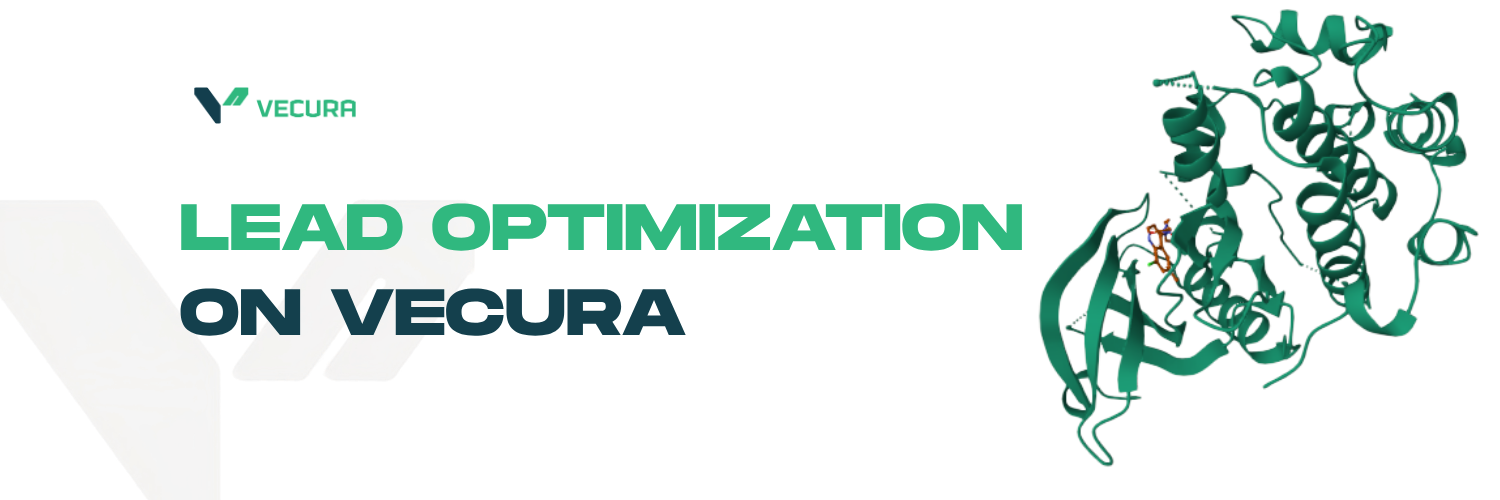
How the Vecura platform uses Proteina-Complexa to generate a complete binder-target complex in under three minutes, producing a dense, analyzable interface near the NEK2 ATP pocket for downstream scoring.

ユースケース
This workflow on Vecura uses GenMol – a model belonging to the BioNeMo collection, to turn a single flagged compound into a batch of drug-like alternatives in seconds, then validates every one of them so a chemist can act on the results with confidence.

ユースケース
This update focuses on BioNeMo’s open‑source models, which are now available on Vecura with no‑code access. By making these models openly available, BioNeMo empowers scientists to design novel molecules, predict structures, and accelerate drug discovery workflows, all while lowering the barrier to entry for advanced AI in life sciences.


ユースケース
Virtual screening has transformed drug discovery, turning a slow, billion‑dollar process into a fast, computational workflow. On Vecura, researchers can access over 300 AI‑powered models covering every stage of the pipeline: from structure prediction and docking to binding affinity, ADMET prediction, and generative chemistry. This guide shows how to choose the right tools to accelerate your path from target to therapeutic.
.png)
ユースケース
Every drug begins as a question: does this molecule fit? Molecular docking answers that question computationally by predicting how a small molecule, peptide, or protein settles into a binding site and estimating how tightly it holds. What once required weeks of crystallography or biochemical assay can now be explored in minutes, at scale, before a single compound is synthesized.
.png)
ユースケース
From AlphaFold2’s breakthrough accuracy to Boltz‑2’s binding affinity predictions, protein structure prediction has leapt from theory into everyday research. On Vecura, scientists can now fold single chains in seconds, model complex assemblies, design antibodies, and even tackle cyclic peptides — all with AI‑powered precision. This guide breaks down the models, their strengths, and how to choose the right one for your experiment.
全12件を表示