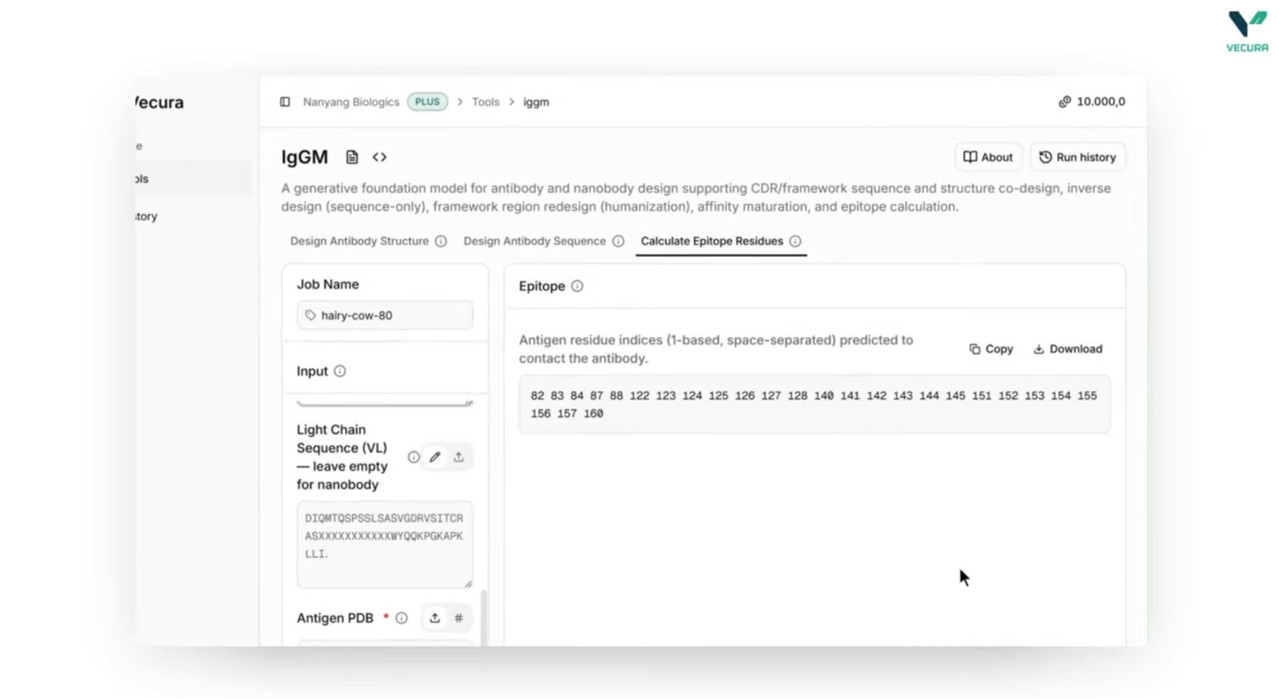
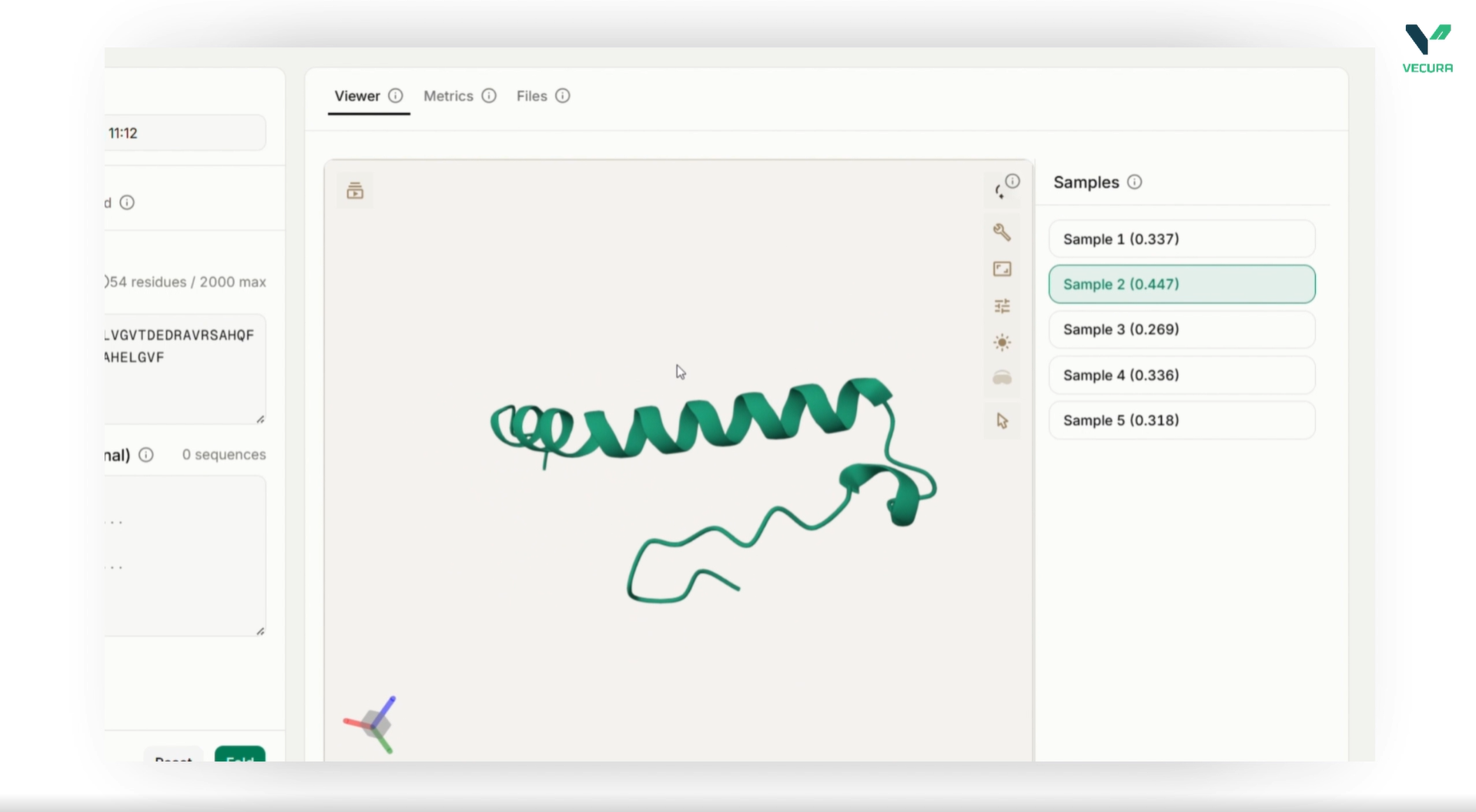
Accelerating Antibody Discovery: DiffAb is Now Available on Vecura
This update empowers researchers to perform advanced antibody CDR co-design directly within Vecura, streamlining the generation of structurally optimized, antigen-specific antibody candidates without the need for complex local infrastructure.
What is DiffAb?
DiffAb is a state-of-the-art, diffusion-based generative model designed for the simultaneous co-design of antibody CDR (Complementarity-Determining Region) sequences and their corresponding 3D backbone structures. Published at NeurIPS 2022, it treats antibody-antigen interaction as a conditional generative task, ensuring that the sampled loops are geometrically compatible with the target antigen. Unlike traditional modular approaches that separate sequence design from structure prediction, DiffAb learns to generate both components concurrently, leading to more physically realistic and functional antibody candidates. It is particularly valuable for researchers working in therapeutic antibody discovery and protein engineering who need to optimize binding interfaces.
What can users do with DiffAb on Vecura?
With DiffAb on Vecura, users can:
-
Generate novel CDR loops: Co-design CDR sequences and 3D geometries conditioned on a specific target antigen.
-
Perform structure-based optimization: Refine existing CDR loops by re-noising the native structure and sampling improved candidates.
-
Manage design workflows: Easily handle multi-CDR or single-CDR design tasks through an intuitive interface without managing underlying compute infrastructure.
-
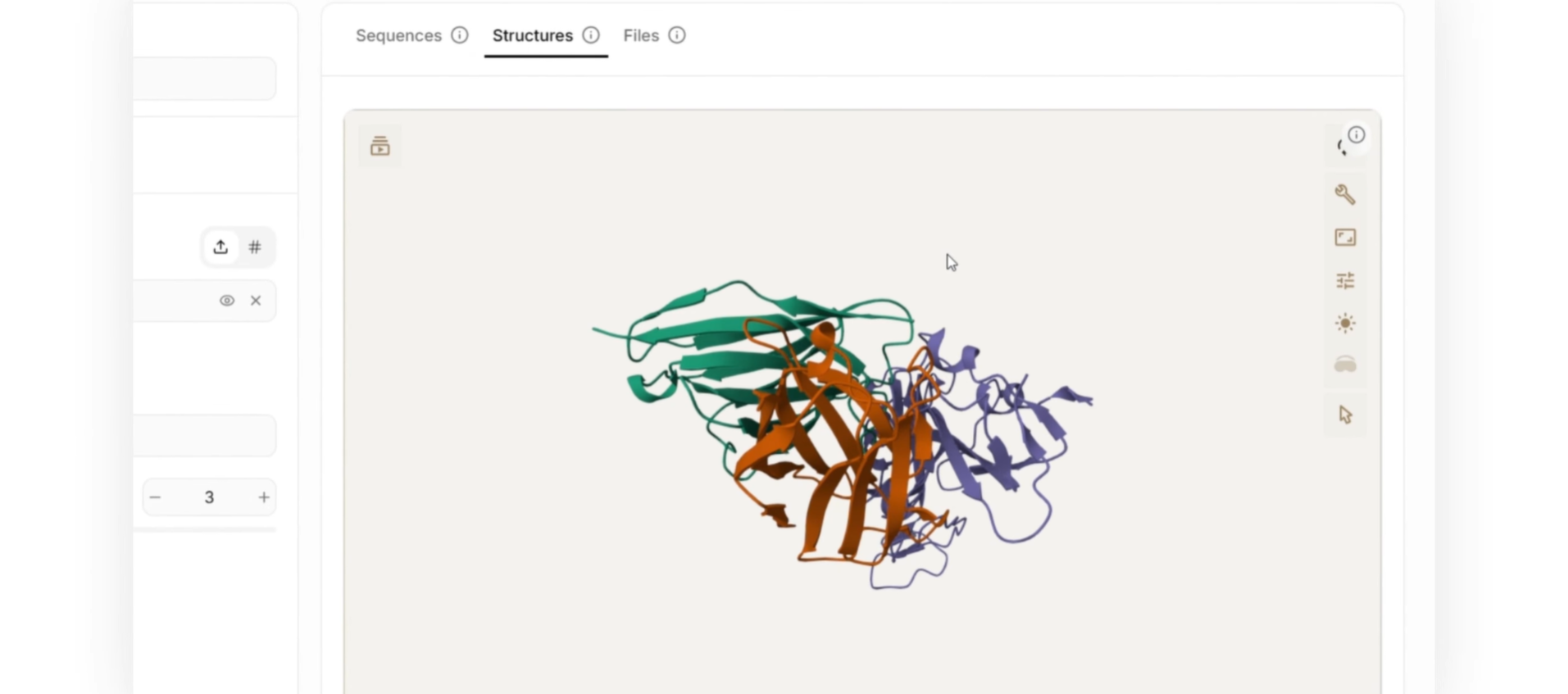
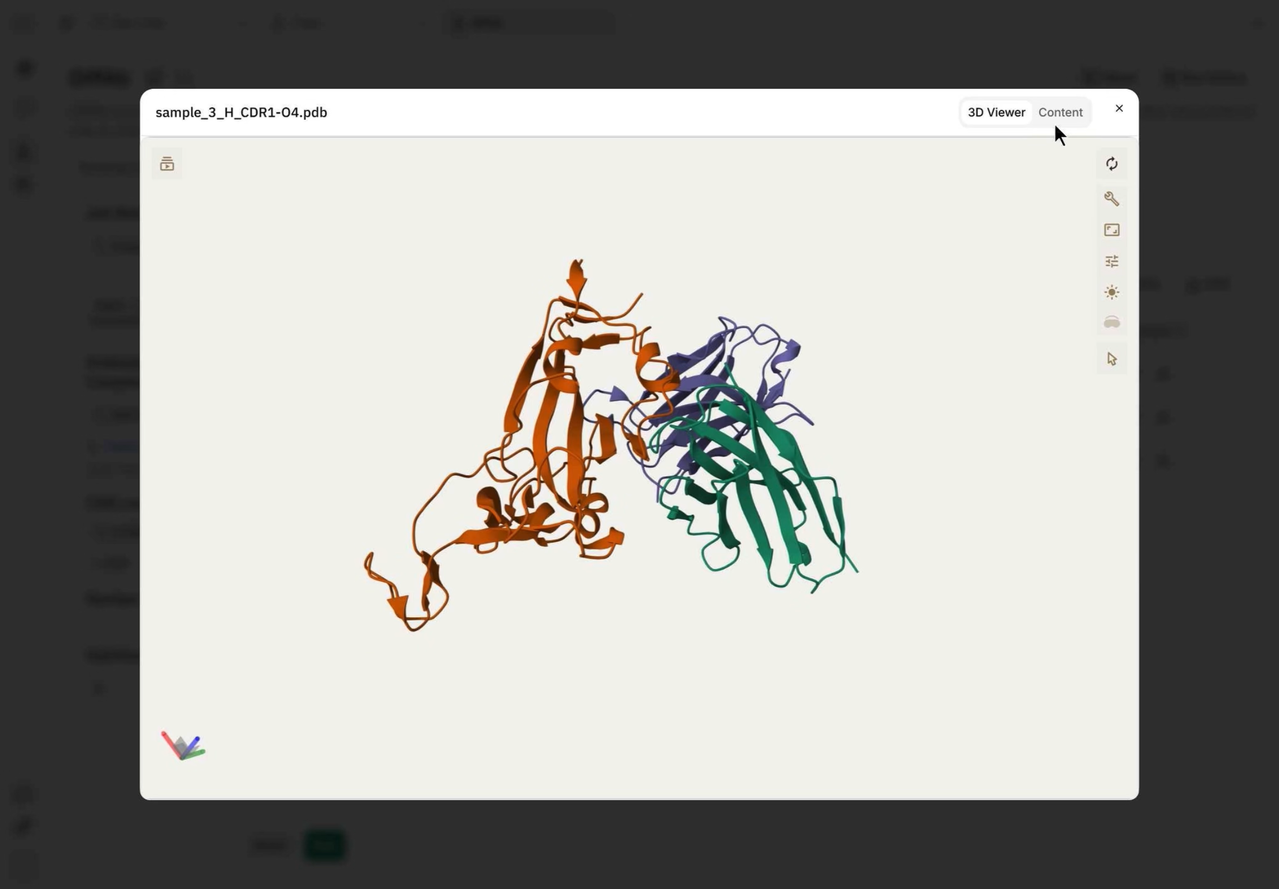
Preview and download results: Inspect generated antibody-antigen complex designs directly in a 3D viewer or download PDB files for further computational analysis.
What the output means
The output provides a set of generated 3D antibody-antigen complex structures in PDB format. Users can preview these designs in 3D to evaluate geometric fit and binding site complementarity.
This output should be used to support scientific decision making, such as prioritizing candidates for subsequent experimental screening. Note that these results are generative predictions and do not replace rigorous experimental validation or binding affinity testing.
Why this matters
The ability to simultaneously design sequences and structures represents a significant leap forward in computational biology. By operating over SE(3)-equivariant representations, DiffAb maintains the essential geometric constraints required for protein stability and antigen binding, offering a more robust alternative to independent sequence-structure prediction methods.
This integration empowers researchers to explore a much broader and more physically plausible design space than was previously accessible. By removing the technical burden of setting up complex dependencies, Vecura accelerates the iterative design cycle, helping teams move faster from initial computational design to laboratory testing in the quest for effective therapeutic antibodies.
-
Developed by: Luost et al. (NeurIPS 2022)
-
Source: Official GitHub Repository
-
Reference: Original paper (NeurIPS 2022 / bioRxiv)
Vecura で DiffAb を試す。
モデルワークスペースを開き、ご自身の入力で評価を始めましょう。