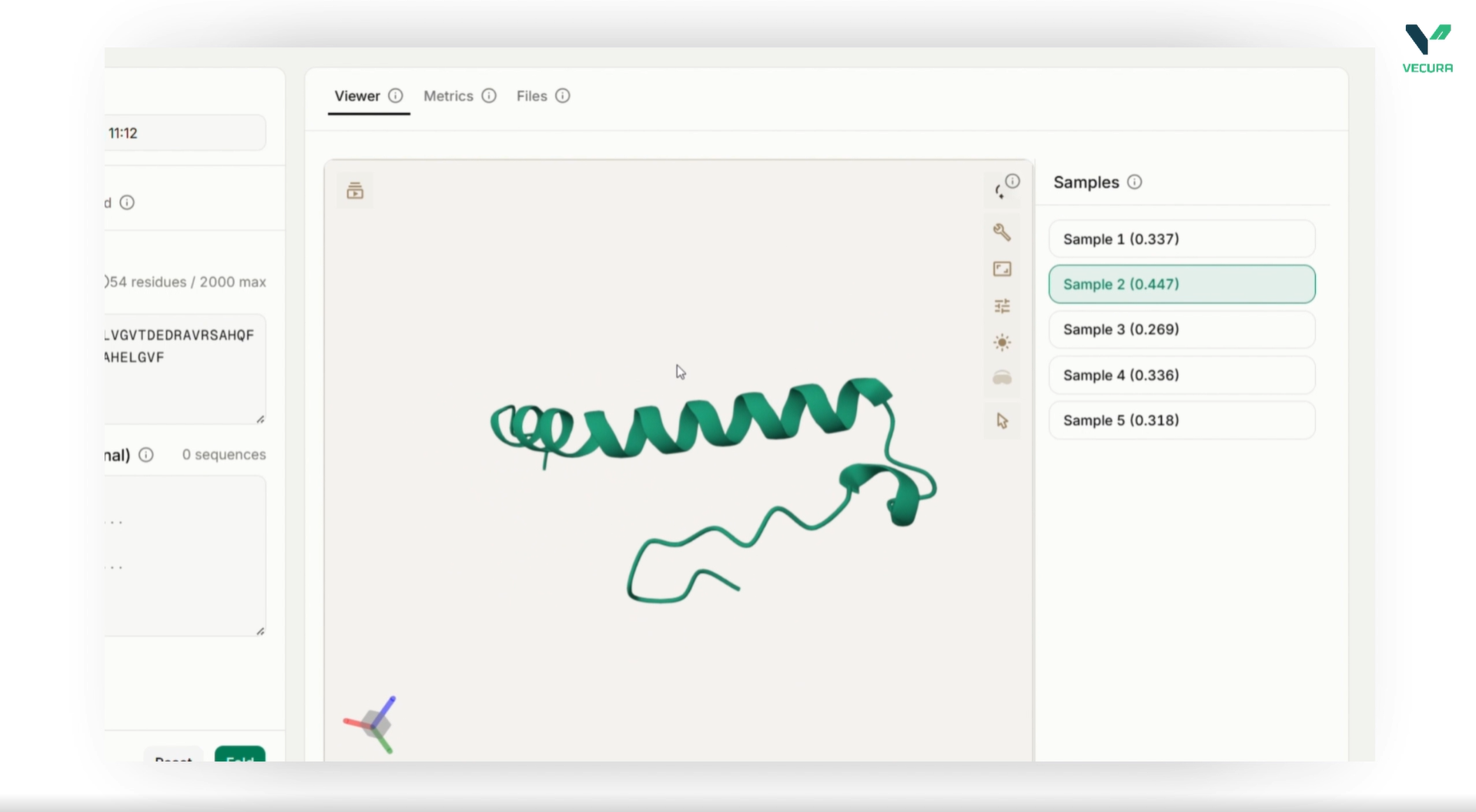
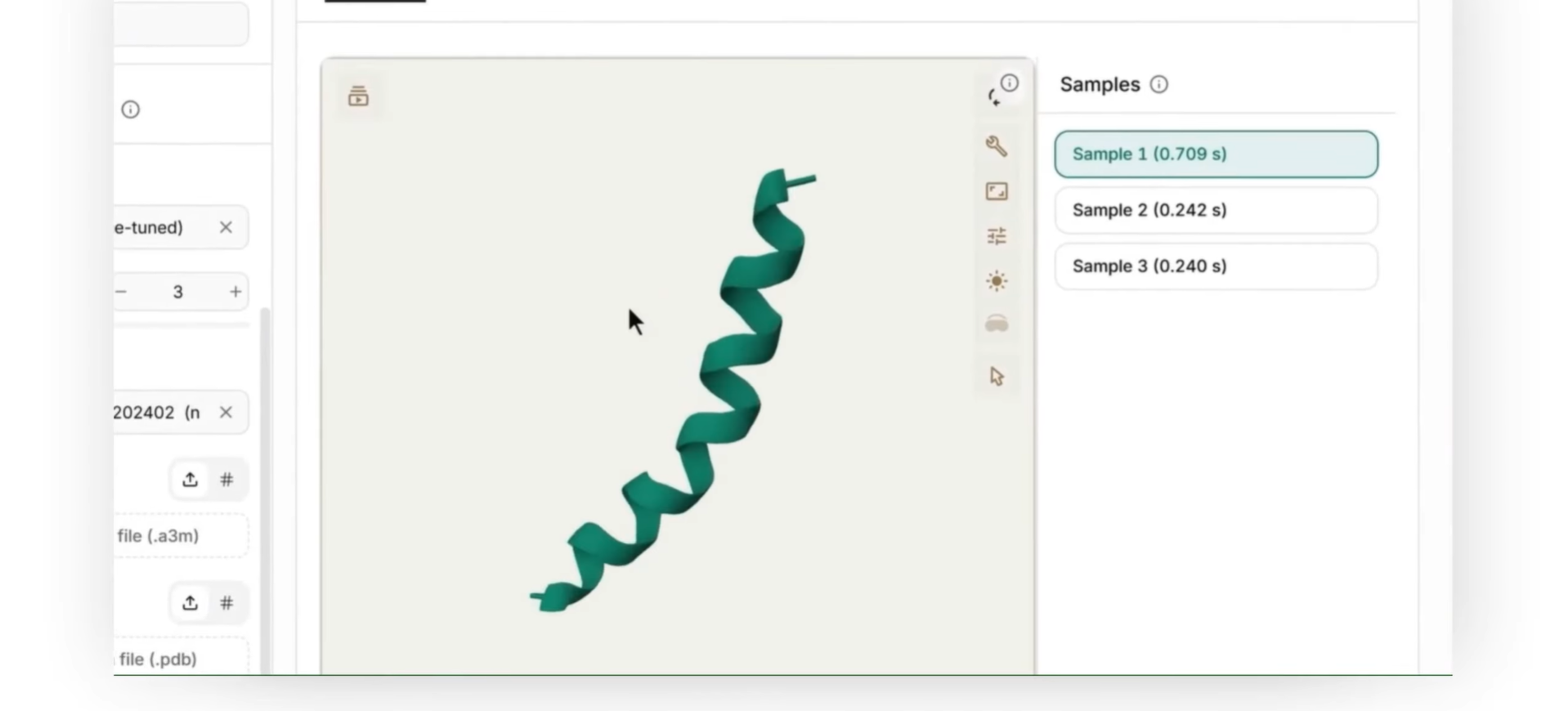
Advanced Protein-Protein Docking with ColabDock Now Available on Vecura
This update enables structural biologists and researchers to perform high-accuracy, restraint-guided protein-protein docking directly within the Vecura platform, eliminating the need for complex, manual computational environment setups.
What is ColabDock?
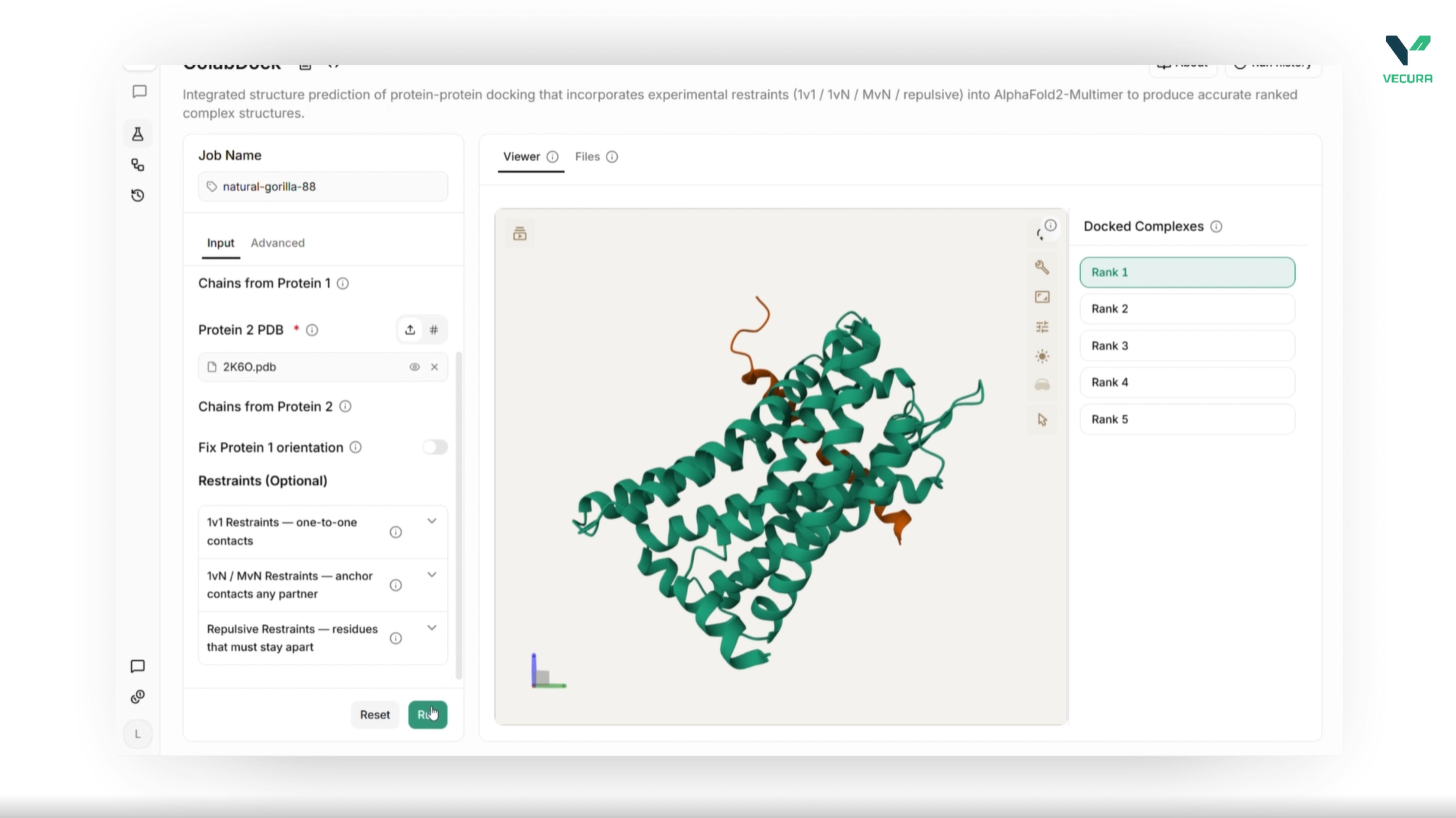
ColabDock is a sophisticated structure-prediction framework designed to streamline protein-protein docking by integrating user-supplied experimental restraints directly into the AlphaFold2-Multimer inference loop. Published in Nature Machine Intelligence (2024), it moves beyond traditional black-box docking by leveraging the ColabDesign JAX framework to perform end-to-end differentiable optimisation. It helps users achieve high-accuracy complex geometries even when working with sparse biochemical data, such as crosslinking mass-spectrometry (XL-MS) or hydrogen–deuterium exchange (HDX) footprints. It is especially useful for structural biologists who need to reconcile experimental constraints with predictive structural models without requiring extensive training on restrained docking datasets.
What can users do with ColabDock on Vecura?
With ColabDock on Vecura, users can:
-
Perform rapid, restraint-guided protein-protein docking without managing complex GPU infrastructure.
-
Upload existing PDB files and automatically merge them into multi-chain complexes for immediate processing.
-
Apply diverse experimental constraints, including one-to-one, one-to-many, multi-group, and repulsive restraints.
-
Generate and rank the top-5 docked complex structures through an automated generation-prediction optimisation loop.
What the output means
The output provides a ranked list of the top-5 docked complex structures in PDB format, accompanied by a tab-separated summary detailing the ipTM scores and the number of satisfied restraints for each candidate.
This output should be used to support scientific decision making, such as guiding site-directed mutagenesis or interpreting biochemical assay data. It does not replace experimental validation and should be interpreted in the context of the underlying AlphaFold2-Multimer confidence metrics.
Why this matters
The ability to accurately predict protein-protein interfaces is a cornerstone of structural biology, yet many computational methods struggle to incorporate specific experimental observations. ColabDock addresses this by bridging the gap between high-throughput predictive modeling and empirical data, allowing researchers to refine structural models based on real-world evidence.
By facilitating the seamless integration of experimental distance constraints into AlphaFold2's prediction pipeline, ColabDock democratizes access to advanced structural modeling, empowering researchers to generate hypotheses that are both computationally grounded and experimentally informed.
-
Developed by: JeffSHF and collaborators
-
Source: Official GitHub Repository
-
Reference: Nature Machine Intelligence (2024)
Vecura で ColabDock を試す。
モデルワークスペースを開き、ご自身の入力で評価を始めましょう。