Proteina: Large-Scale Protein Backbone Generation Now Available on Vecura
This update enables structural biologists, protein engineers, and drug discovery researchers to generate de novo protein backbones through a guided workflow inside Vecura, without setting up complex GPU infrastructure or managing flow-matching model deployments.
What is Proteina?
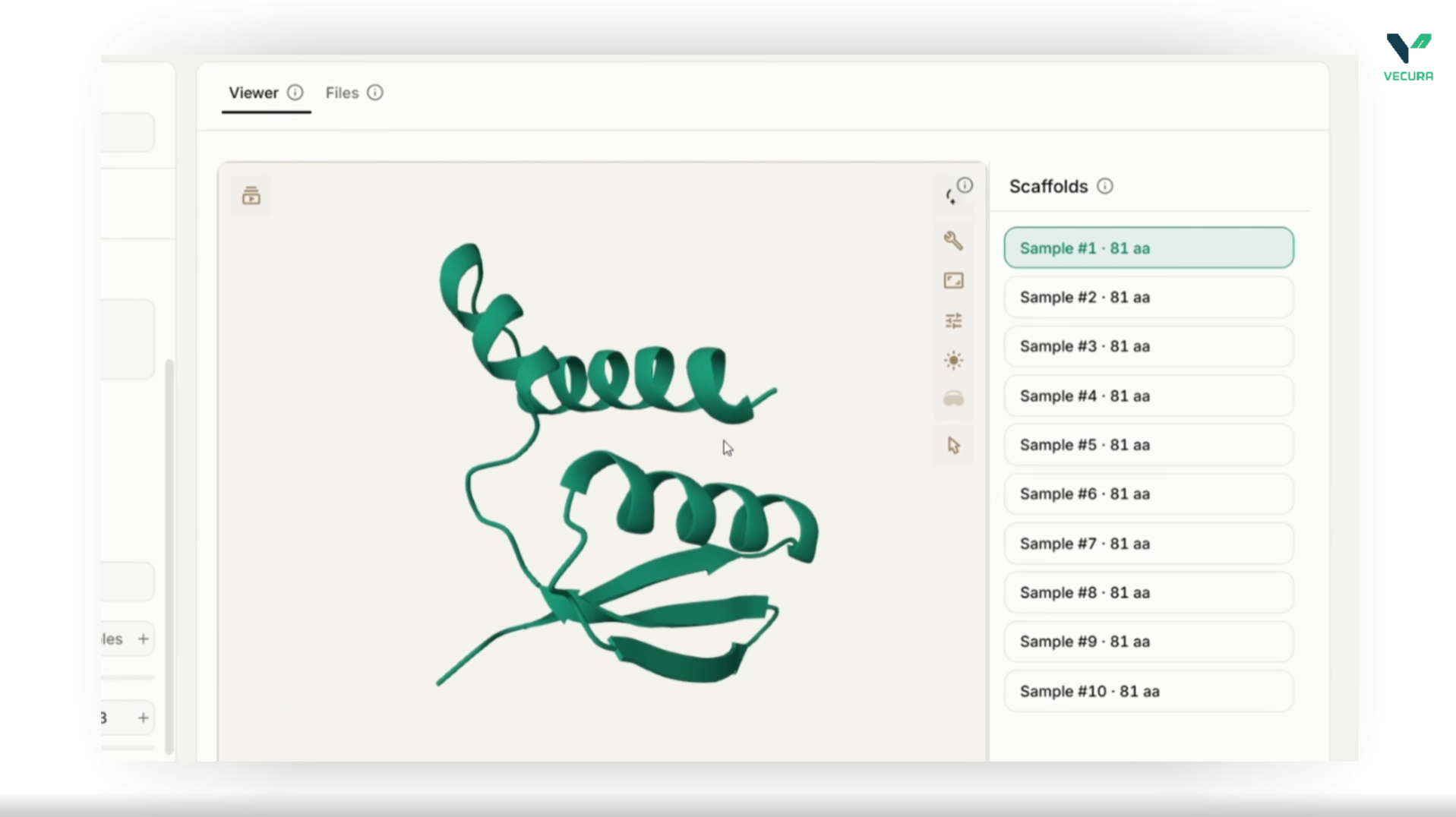
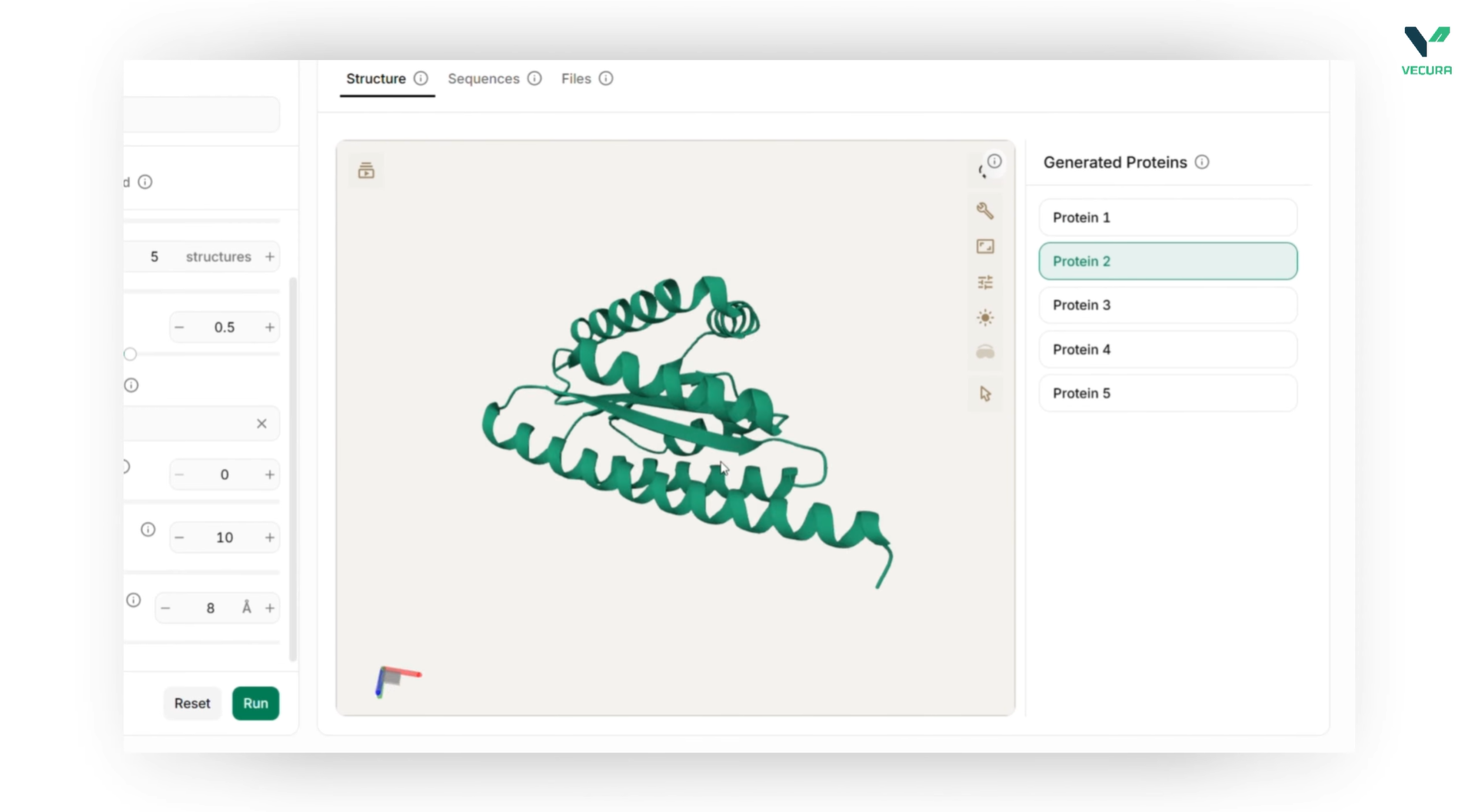
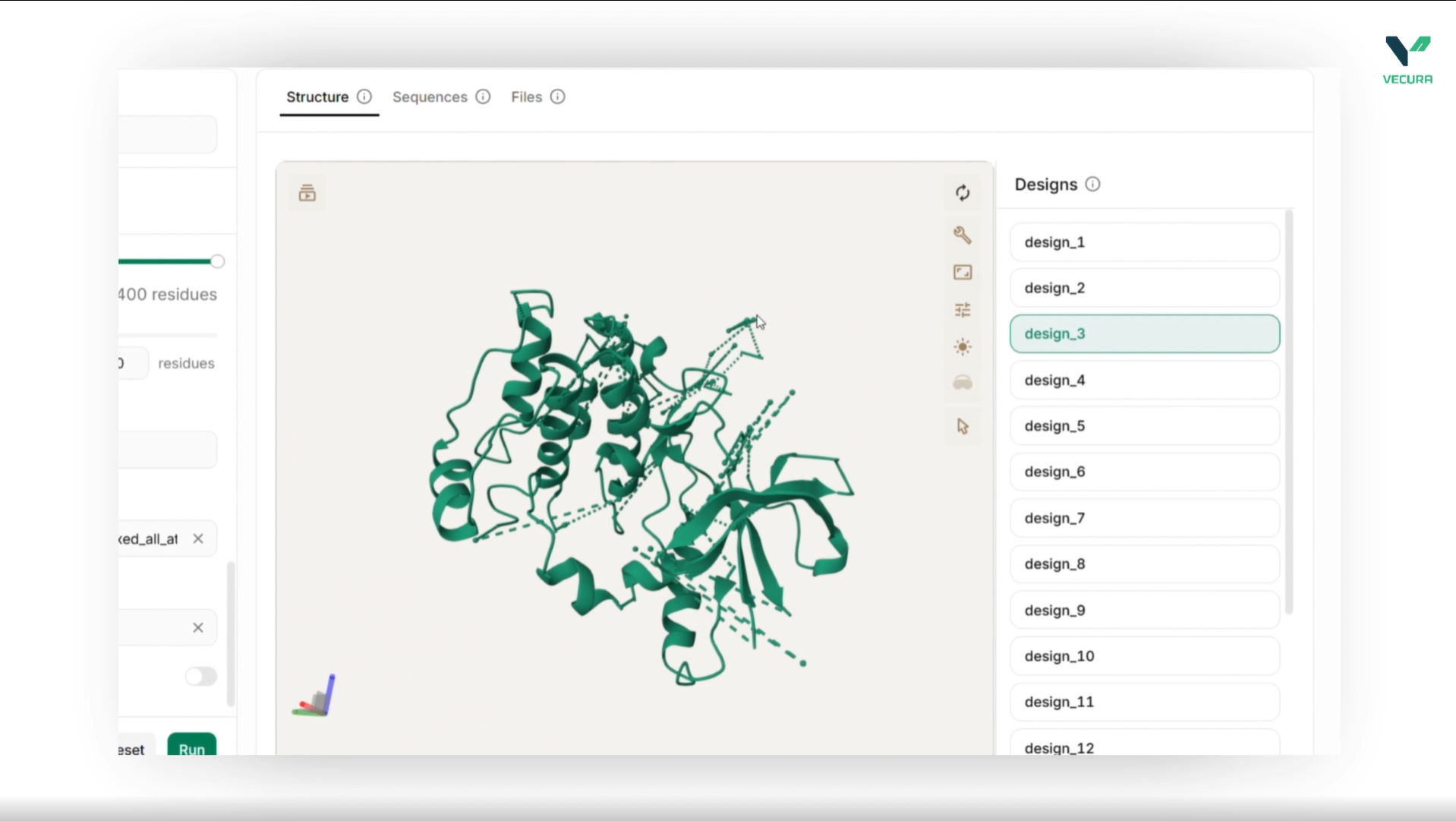
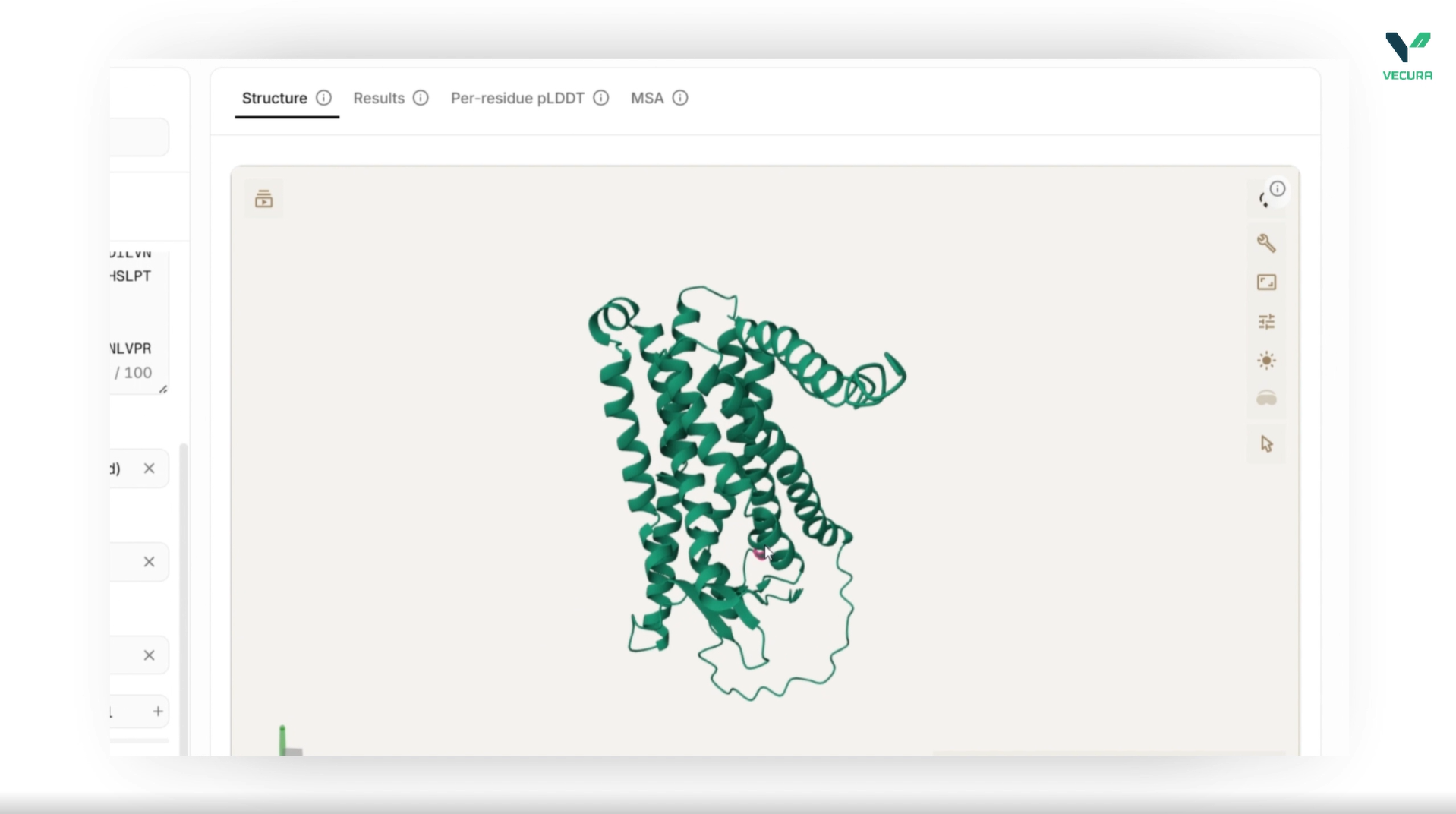
Proteina is a large-scale generative model for protein backbone structures developed by NVIDIA and presented as an ICLR 2025 Oral. It frames backbone generation as a continuous flow-matching problem over alpha-carbon coordinate space, learning a probability path from Gaussian noise to the distribution of real protein backbones. The model uses a non-equivariant transformer architecture with pair-bias attention and supports three generation modes: unconditional de novo design, CATH fold-class conditioned generation, and motif scaffolding around fixed structural elements.
It helps users generate designable protein backbones ranging from 50 to 800 residues that can be fed directly into sequence design tools like ProteinMPNN. It is especially useful for creating novel protein scaffolds, designing proteins with specific fold topologies, and building stable frameworks around functional motifs such as binding epitopes or catalytic sites.
What can users do with Proteina on Vecura?
With Proteina on Vecura, users can:
-
Generate de novo protein backbones for specified lengths (50-800 residues) without fold constraints
-
Create backbones conditioned on hierarchical CATH fold-class labels to target specific structural families
-
Scaffold around fixed structural motifs like binding sites or catalytic triads while generating surrounding backbone
-
Sample multiple backbone variants using deterministic ODE or stochastic SDE modes to explore structural diversity
What the output means
The output provides generated protein backbone structures in PDB format containing alpha-carbon and reconstructed backbone heavy-atom coordinates (N, Cα, C, O) with placeholder glycine residues. Multiple samples are packed as multi-MODEL PDB files ready for visualization in structure viewers like Molstar or direct input to inverse-folding models.
This output should be used to support scientific decision making in protein design workflows. It does not replace experimental validation—generated backbones require downstream sequence design and folding verification with tools like AlphaFold or ESMfold before wet-lab testing.
Why this matters
De novo protein design represents a paradigm shift in structural biology and therapeutic development. Traditional protein engineering relies on modifying existing natural proteins, but generative models like Proteina enable researchers to create entirely novel protein architectures from scratch. This capability is critical for designing custom scaffolds for vaccine development, creating stable frameworks for enzyme engineering, and building protein therapeutics with tailored binding properties.
Flow-matching approaches offer advantages over diffusion models by learning smoother probability paths from noise to data, resulting in higher-quality backbone generation with better geometric properties. By supporting hierarchical fold-class conditioning and motif scaffolding in a single model family, Proteina bridges the gap between unconstrained de novo design and template-based modeling, giving researchers fine-grained control over the structural space they explore while maintaining the creative potential of generative AI.
-
Developed by: NVIDIA BioNeMo
-
Source: ICLR 2025 Oral Paper, GitHub Repository, Project Page
-
Reference: Proteina: Scaling Flow-based Generative Models of Protein Backbones, NVIDIA Research, ICLR 2025
在 Vecura 上试用 Proteina
打开模型工作区,用您自己的输入开始评估