RoseTTAFold3 is now available on Vecura
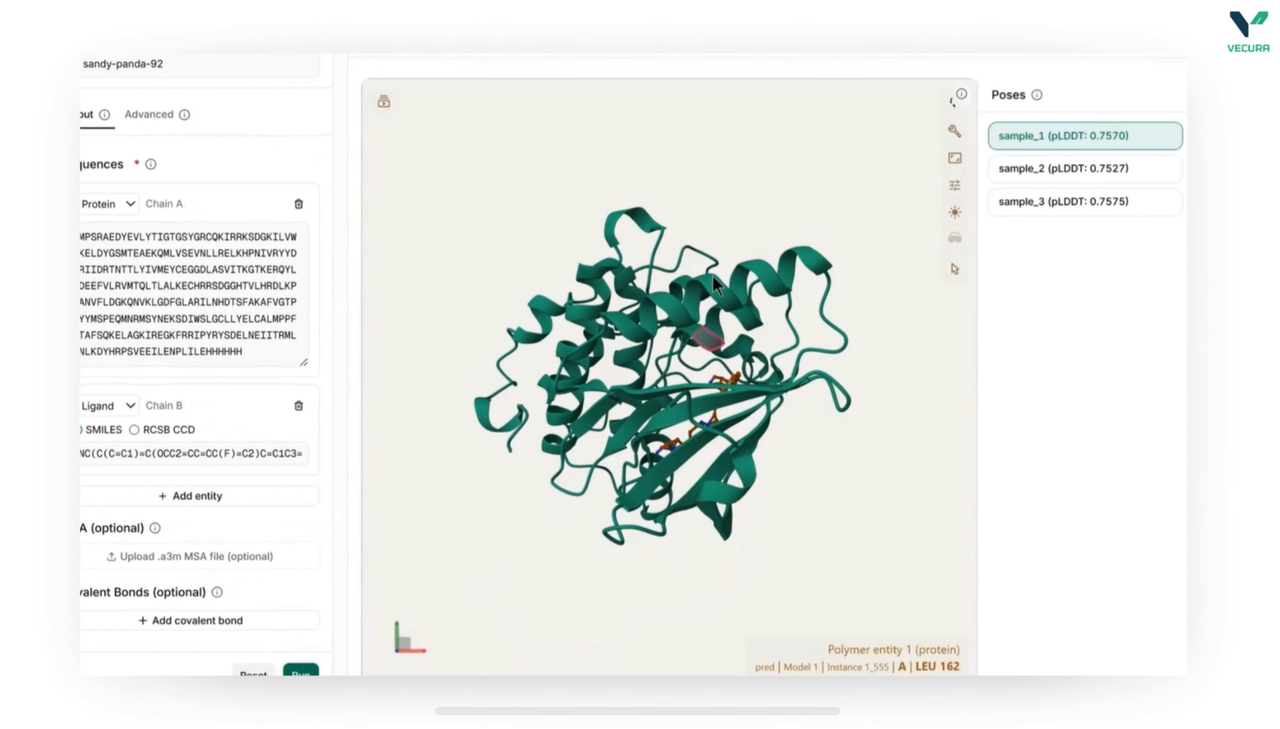
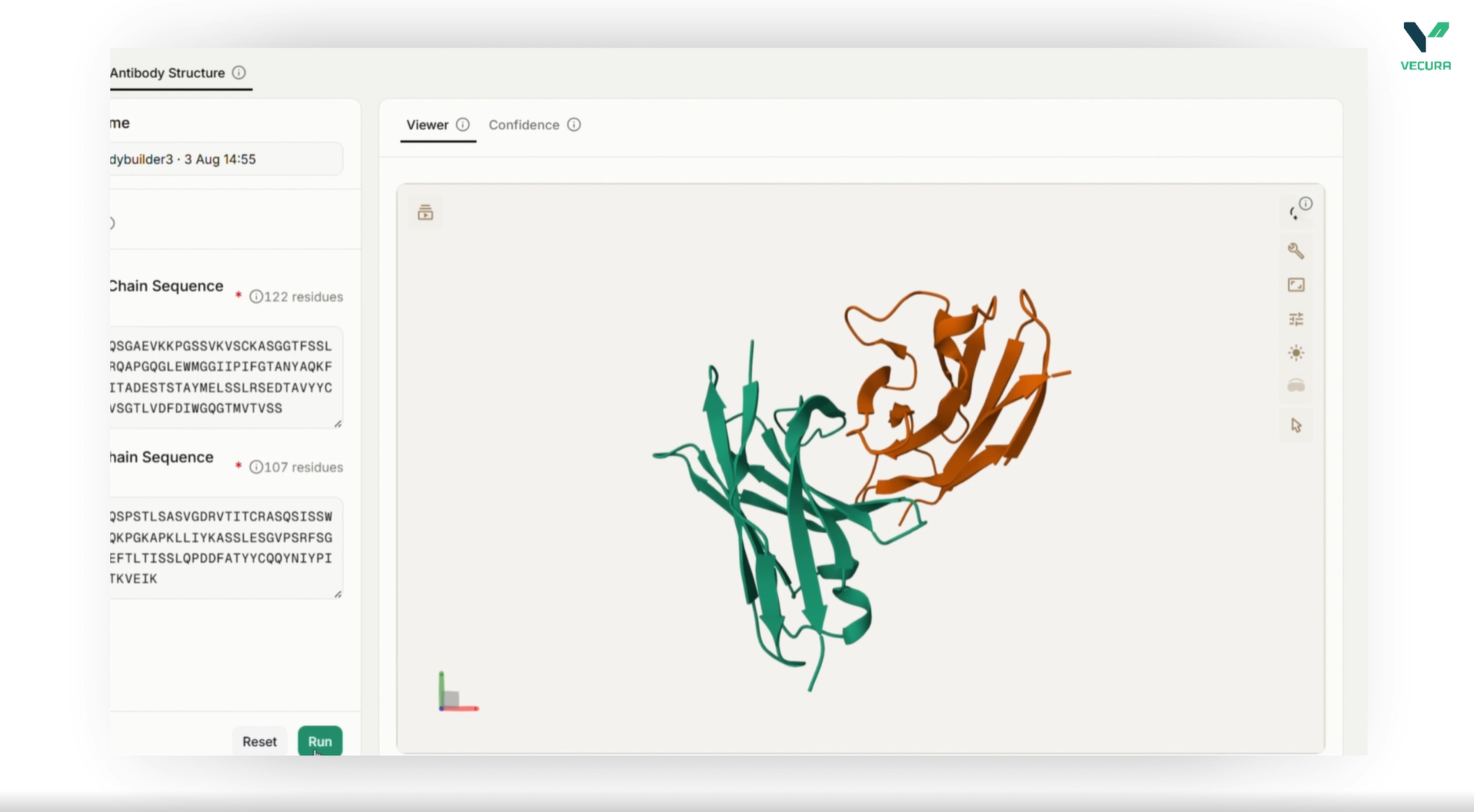
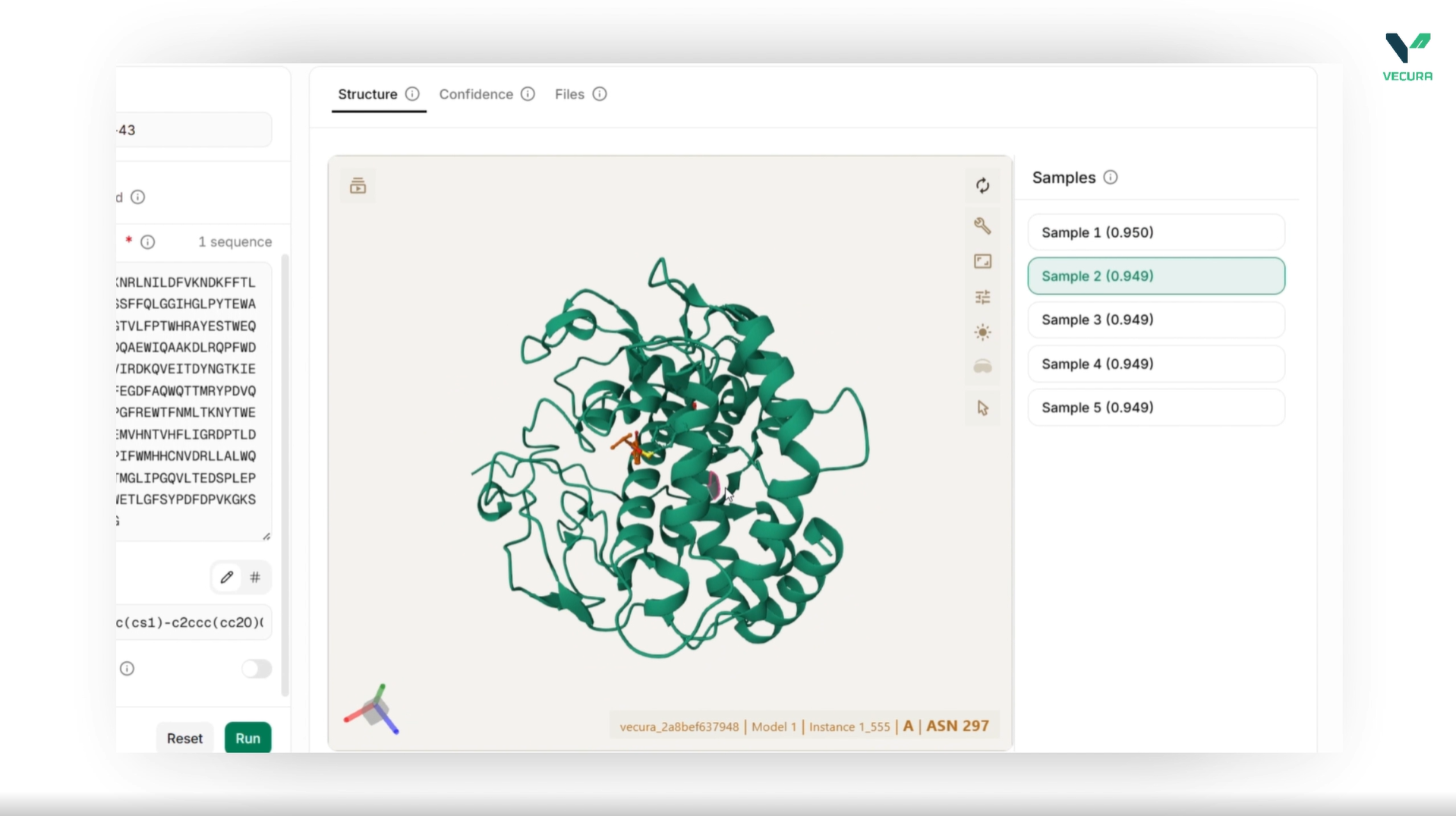
This update enables researchers and computational biologists to generate high-fidelity, all-atom structural predictions for complex biomolecular assemblies through a guided, accessible workflow inside Vecura, removing the need to manage complex, resource-intensive technical infrastructure.
What is RoseTTAFold3?
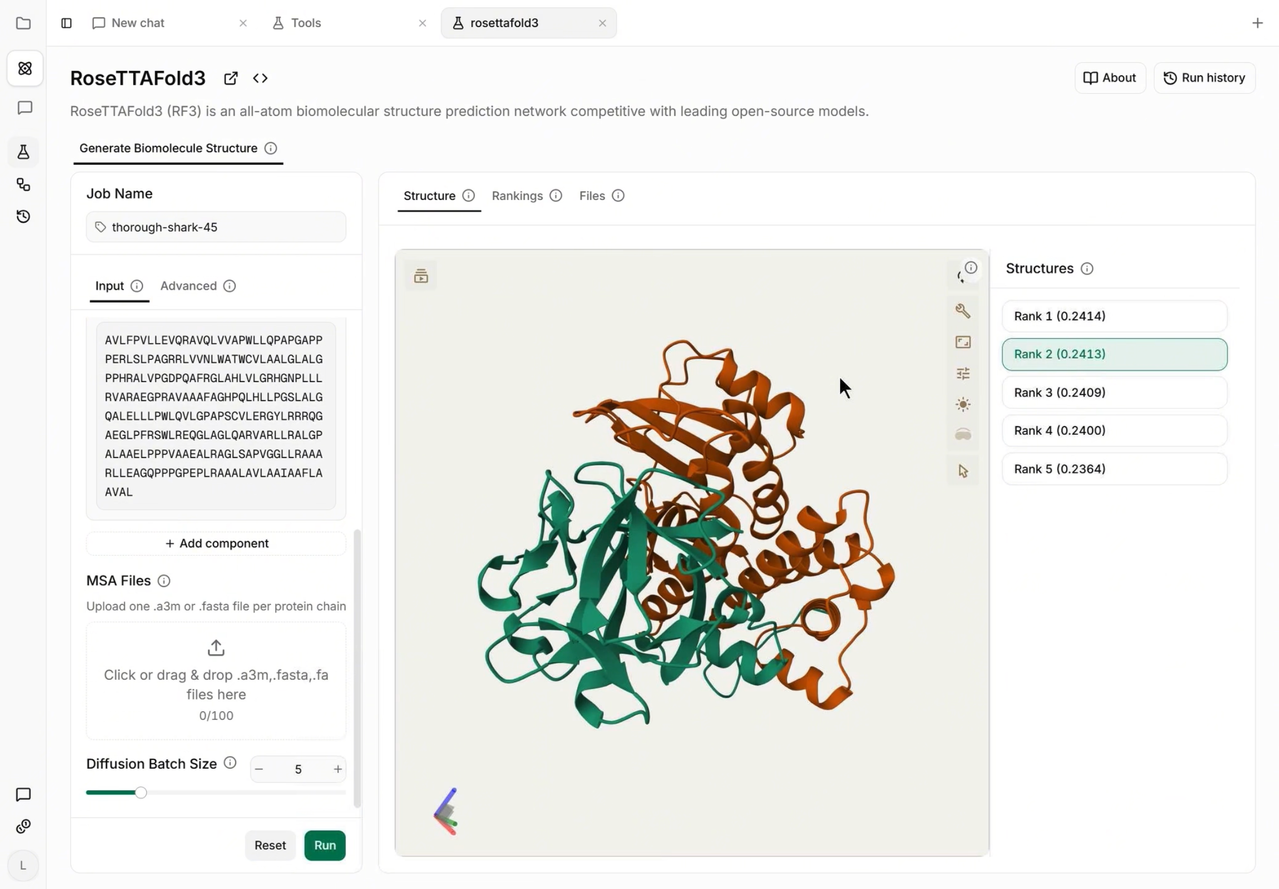
RoseTTAFold3 (RF3) is a sophisticated all-atom biomolecular structure prediction network developed by the Baker lab and RosettaCommons. Unlike previous generations, this model can predict the 3D coordinates of complex biomolecular assemblies—including proteins, DNA, RNA, small-molecule ligands, metal ions, and covalently modified residues—directly from their sequences. By leveraging implicit chirality representations and atom-level geometric conditioning, it provides highly accurate structural predictions that compete with leading open-source models like AlphaFold3.
It helps researchers navigate the complexities of structural biology by simplifying the prediction of multi-component complexes. It is especially useful for computational biologists and structural chemists who need to integrate custom small molecules or experimental data into their structural modeling workflows without extensive pre-processing.
What can users do with RoseTTAFold3 on Vecura?
With RoseTTAFold3 on Vecura, users can:
-
Generate high-resolution 3D structures of biomolecular complexes using a streamlined interface.
-
Integrate custom small-molecule ligands and experimental structural data directly into their predictions.
-
Explore conformational diversity by configuring diffusion sampling parameters to generate structural ensembles.
-
Easily visualize model confidence, including per-atom pLDDT and PAE scores, to assess the reliability of predicted models.
What the output means
The output provides a comprehensive set of predicted structural models in CIF format, accompanied by a detailed confidences table. This table includes per-residue and per-token metrics such as pLDDT, pairwise aligned error (PAE), and whole-complex pTM/ipTM scores, allowing users to rank and filter their results based on statistical confidence.
This output should be used to support scientific decision making. It does not replace experimental validation.
Why this matters
Structural biology is the foundation for understanding biological mechanisms, drug discovery, and protein design. Historically, modeling complex assemblies involving non-protein components like ligands or nucleic acids was a time-consuming, highly technical bottleneck. RoseTTAFold3 represents a significant leap forward by unifying these diverse modalities into a single, cohesive framework.
By enabling all-atom predictions through an intuitive platform like Vecura, this tool democratizes access to advanced structural modeling. It empowers researchers to accelerate their hypothesis testing and structural studies, moving faster from sequence data to actionable biological insights.
-
Developed by: The Baker Lab / RosettaCommons
-
Source: Official GitHub Repository
-
Reference: Preprint: Accelerating Biomolecular Modeling with AtomWorks and RF3
Vecura で RoseTTAFold3 を試す。
モデルワークスペースを開き、ご自身の入力で評価を始めましょう。