MAFFT is now available on Vecura: Fast and Accurate Multiple Sequence Alignment
This update enables bioinformaticians, genomic researchers, and structural biologists to perform fast and highly accurate multiple sequence alignments of DNA, RNA, and protein sequences through a guided workflow inside Vecura, without setting up complex technical infrastructure.
What is MAFFT?
MAFFT (Multiple Alignment using Fast Fourier Transform) is a fast and accurate multiple sequence alignment program designed for aligning protein, DNA, and RNA sequences of varying lengths and phylogenetic distances. It solves the core computational biology challenge of positioning homologous residues in the same column across dozens to thousands of sequences by leveraging Fast Fourier Transforms (FFT) on residue-volume and polarity signals. It helps users quickly align nucleotide and amino-acid sequences, enabling downstream tasks like phylogenetics, comparative genomics, and structural modeling. It is especially useful for pipelines requiring highly scalable progressive alignments or highly accurate iterative-refinement strategies on complex biological sequences.
What can users do with MAFFT on Vecura?
With MAFFT on Vecura, users can:
- Build fresh multiple sequence alignments: Align two or more unaligned DNA, RNA, or protein sequences using high-speed progressive strategies (such as FFT-NS-1/2) or high-accuracy iterative-refinement algorithms (such as L-INS-i, G-INS-i, and E-INS-i).
- Add new sequences or fragments to existing alignments: Seamlessly insert new sequences or short metagenomic fragments into an existing reference alignment without disrupting original column positions or introducing unwanted gaps.
- Merge multiple independent sub-alignments: Combine pre-built sub-alignments into a single, cohesive multiple sequence alignment while preserving each sub-alignment as a monophyletic cluster.
- Automate optimization and direction adjustments: Automatically select the best alignment strategy via the
--autoflag, configure multi-threading for optimal speed, or detect and correct reverse-complement sequences for nucleotide datasets.
What the output means
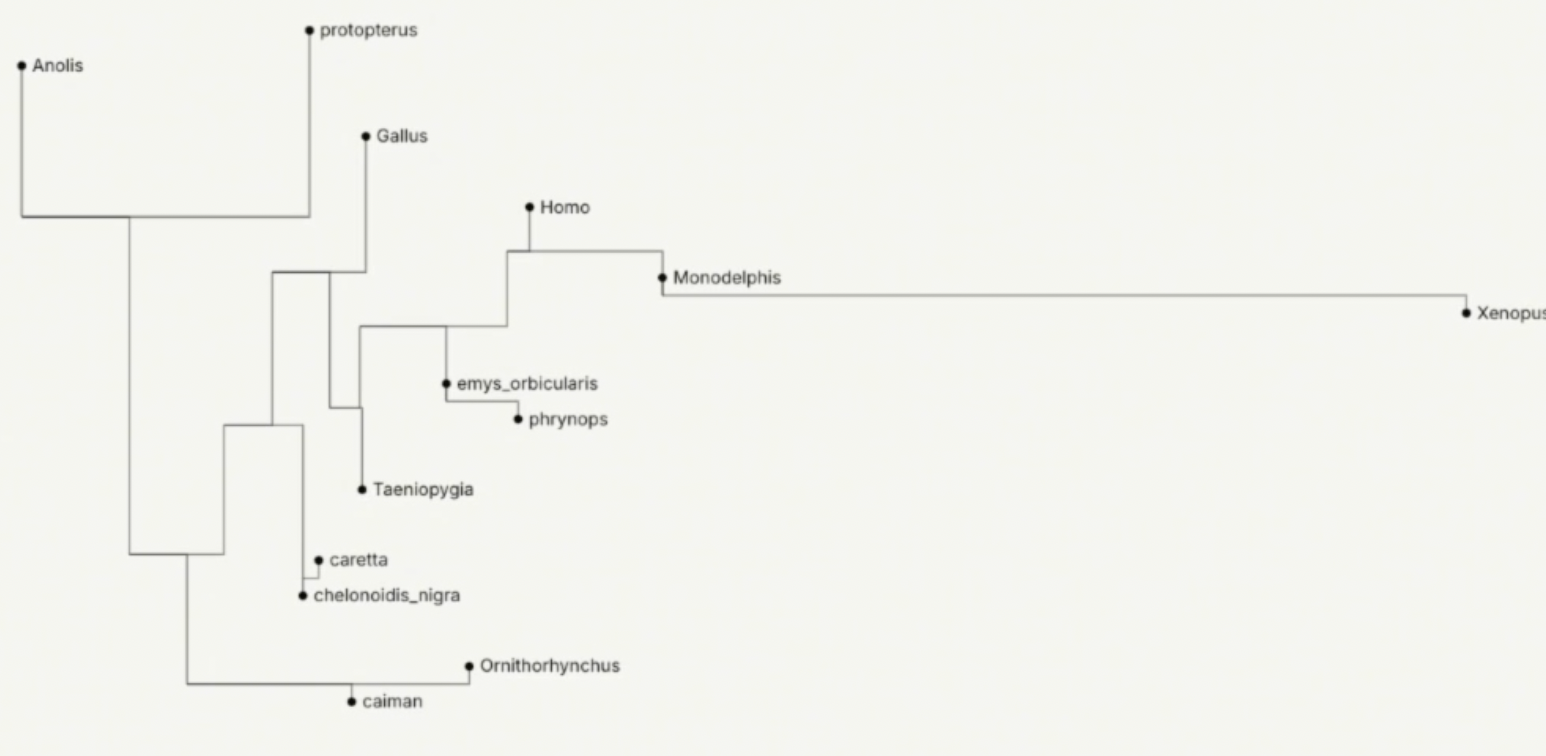
The output provides aligned sequence files in FASTA, Clustal, or Phylip format, the final alignment length including gaps, the total number of aligned sequences, the specific algorithm strategy used, and optionally, a Newick-format guide tree or a sequence position map.
This output should be used to support scientific decision making. It does not replace experimental validation.
Why this matters
Multiple sequence alignment (MSA) is the bedrock of modern computational biology, serving as a critical first step in reconstructing evolutionary relationships, predicting secondary and tertiary macromolecular structures, annotating functional variants, and identifying highly conserved catalytic domains. By translating sequence similarities into physical and chemical property signals via Fast Fourier Transforms, MAFFT circumvents the quadratic computational bottlenecks of traditional alignment approaches, scaling efficiently from small gene families to massive genomic datasets.
Furthermore, because different biological scenarios demand different trade-offs between processing speed and alignment accuracy, MAFFT’s flexible workflow on Vecura empowers researchers to switch seamlessly between fast heuristic tree-building and resource-intensive iterative dynamic programming. This accessibility ensures high-throughput comparative genomics and structural modeling pipelines can proceed with robust, biochemically sound sequence alignments without the burden of maintaining complex, high-performance local computing setups.
- Developed by: Dr. Kazutaka Katoh and colleagues (Research Institute for Microbial Diseases, Osaka University and National Institute of Genetics, Japan)
- Source: Official website and GitHub Source Code
- Reference: Katoh & Standley (2013) MAFFT multiple sequence alignment software version 7
Try MAFFT on Vecura.
Open the model workspace and start evaluating it with your own inputs.