Harnessing Advanced Macromolecular Docking with LightDock on Vecura
This update allows researchers and bioinformaticians to perform advanced protein-protein and protein-DNA docking through an automated, streamlined pipeline in Vecura, eliminating the need to manage complex simulation environments.

What is LightDock?
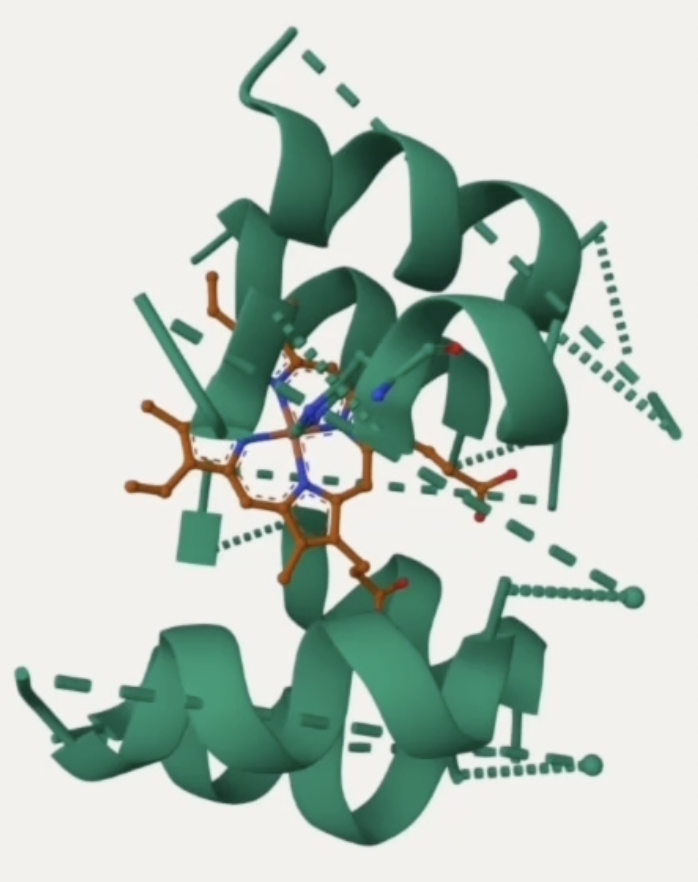
LightDock is a sophisticated macromolecular docking framework designed to predict the binding orientation of biomolecular complexes, including protein-protein, protein-peptide, and protein-DNA interactions. It utilizes the Glowworm Swarm Optimization (GSO) algorithm to efficiently explore the conformational landscape, allowing it to navigate complex binding surfaces while avoiding the limitations of gradient-based optimization methods.
It helps users model biological interactions by sampling candidate poses and scoring them through a variety of customizable physical and statistical potentials. It is especially useful for researchers studying protein-protein interfaces, performing virtual screenings, or investigating potential conformational changes through its integrated backbone flexibility modes.
What can users do with LightDock on Vecura?
With LightDock on Vecura, users can:
-
Perform rapid, automated protein-protein, protein-peptide, or protein-DNA docking workflows without manual environment configuration.
-
Incorporate experimental data via residue-level restraints to bias sampling toward known binding interfaces.
-
Utilize backbone flexibility via the Anisotropic Network Model (ANM) to simulate induced-fit binding scenarios.
-
Generate and rank candidate binding poses using a variety of user-selected scoring functions tailored to specific molecular characteristics.
What the output means
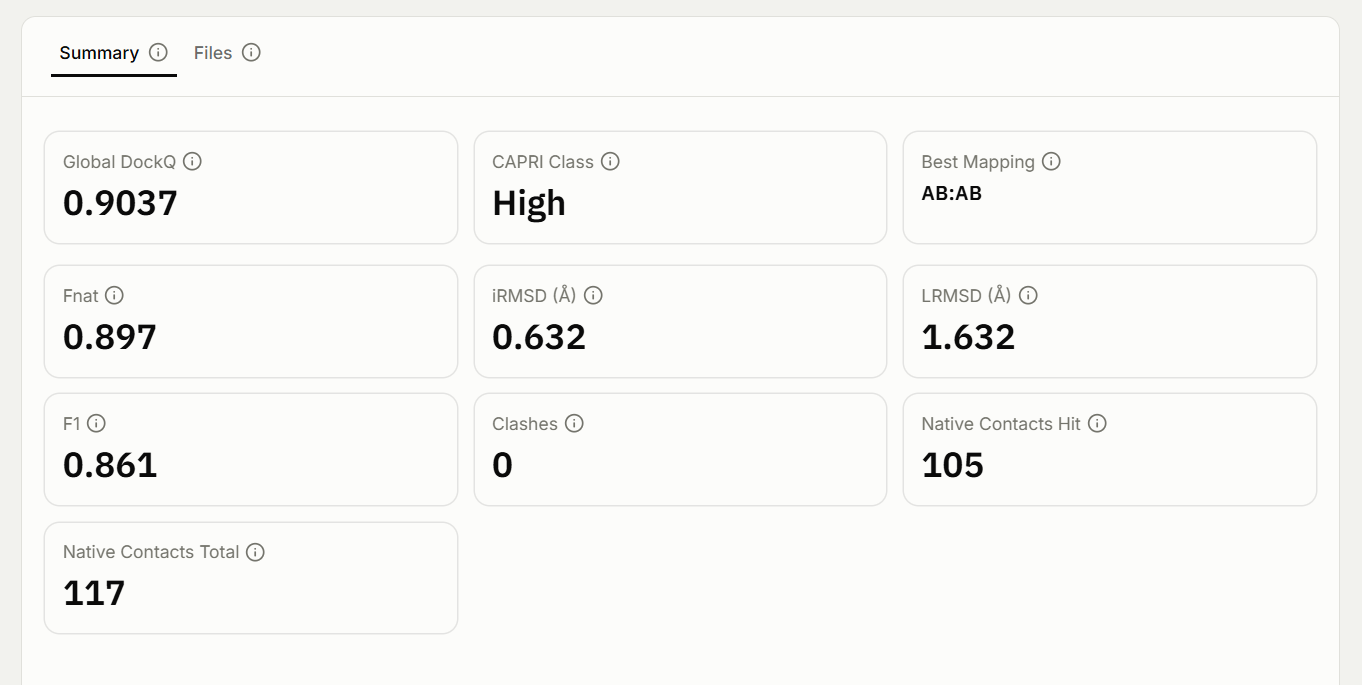
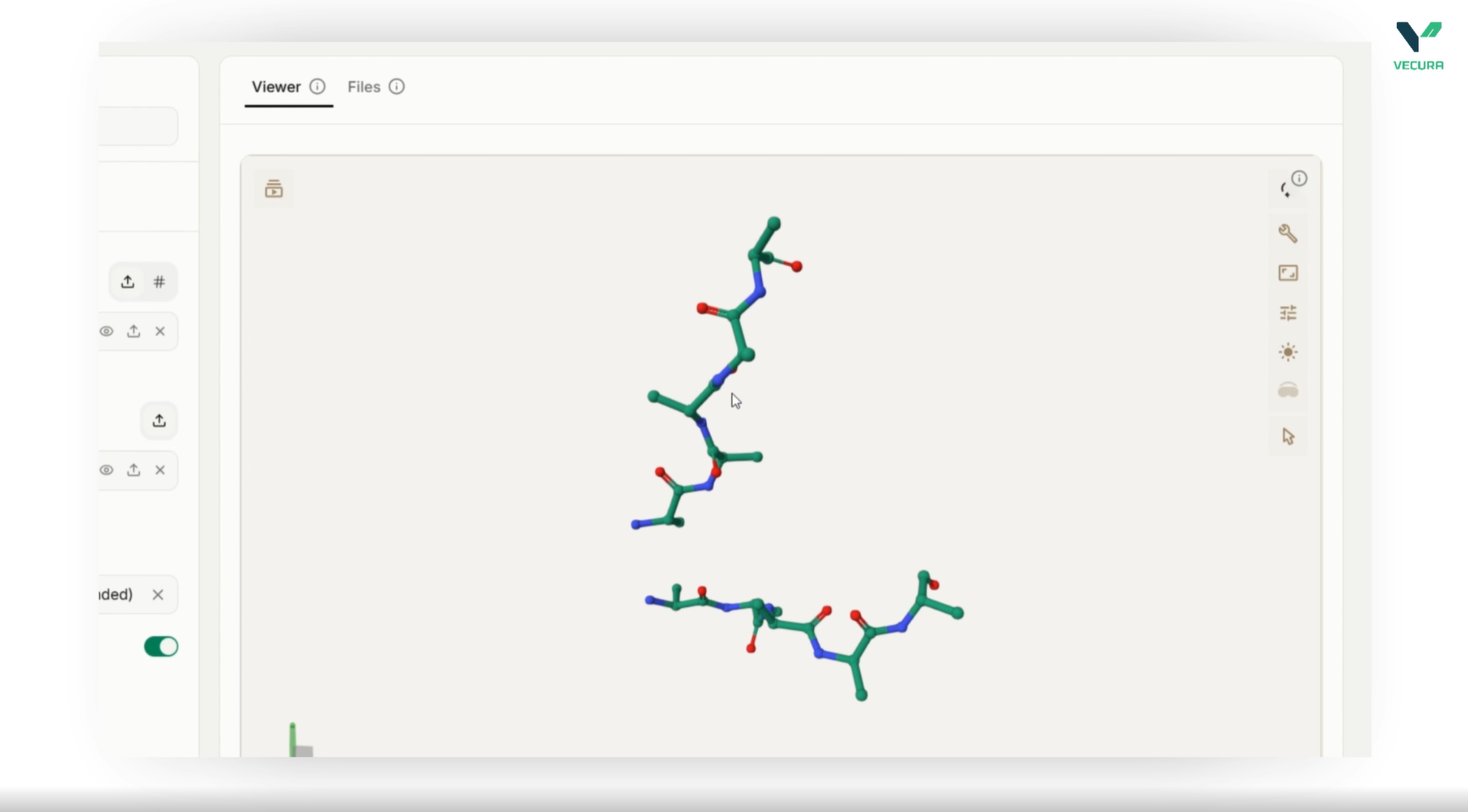
The output provides a ranked list of predicted molecular complexes, including detailed GSO scoring values and assembled PDB structures for the top-N generated models.
This output should be used to support scientific decision making. It does not replace experimental validation.
Why this matters
Understanding how proteins and other biomolecules interact is fundamental to deciphering cellular signaling, enzymatic activity, and disease mechanisms. By providing an efficient, scalable, and customizable framework for modeling these interactions, LightDock bridges the gap between static structural data and dynamic biological function.
The ability to incorporate flexibility and experimental constraints directly into the docking process allows researchers to tackle more complex biological questions, providing actionable structural hypotheses that can guide downstream wet-lab experiments.
-
Developed by: The LightDock development team (based on the work by Brian Jiménez-García et al.)
-
Source: LightDock GitHub
-
Reference: Jiménez-García et al., Bioinformatics 2018
Try LightDock on Vecura.
Open the model workspace and start evaluating it with your own inputs.