Faster to the cure.
Our mission is to use AI to clear the bottlenecks that slow scientists down, so more of their time goes to the questions only they can ask.
Discovery shouldn’t be scattered across disconnected tools.
A single project today moves through literature searches in one place, structure prediction in another, docking on a cluster, spreadsheets to compare results, and email threads to get compounds made and tested. Every handoff costs days, and context gets lost along the way.
Vecura brings that path into one platform. You ask a question in plain language, design with the tools and models the field already trusts, and plan validation with partner labs, all in one project that keeps the record of how you got there.
We don’t run the lab. Contract research organisations are our partners: Vecura turns a finished design into a clear request, and the lab’s results come back into your project, next to the designs that produced them.
Disconnected workflow
- Literature
- Databases
- Structure prediction
- Docking
- Spreadsheets
- Email to the lab
One project
- 01Ask a question in plain language
- 02Design with 350+ tools and models
- 03Send the best designs to a partner lab

A co-scientist you can trust.
A co-scientist, not a replacement
Vecura plans, searches and runs the heavy computation. Scientists decide what matters and what to test.
Show the work
Every plan is visible, every run is recorded and every result can be traced back to the inputs that made it.
Your data stays yours
SOC 2 Type I and ISO 27001, end-to-end encryption, and private deployments for teams that need them.
Every breakthrough started as a question.
Each of these took years of work at the bench. The tools got better with every one. The next breakthrough could take days.
- Before: discovery by hand

1928
Penicillin mould
Penicillin
Alexander Fleming notices a mould killing bacteria on a culture plate, opening the age of antibiotics.

1953
Double-helix model
DNA double helix
The structure of DNA is solved, showing how genetic information is stored and copied.

1958
Myoglobin model
First protein structure
X-ray crystallography reveals myoglobin in 3D, the first protein structure ever solved.
- Reading the molecules

1983
Thermal cycler
PCR
The polymerase chain reaction copies a stretch of DNA millions of times in hours.
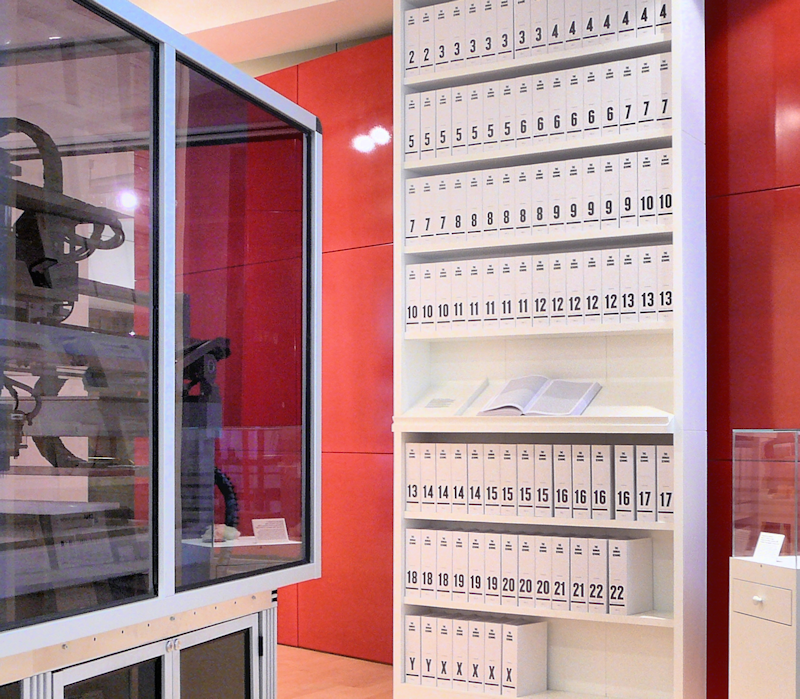
2003
Printed human genome
Human genome
The Human Genome Project completes a reference sequence of human DNA.
- The AI era
2020
Predicted structure
Structure prediction
AI predicts protein structures from sequence with accuracy close to experiment.
Next
Next: yoursThe question you’re working on now.
Vecura is built by NYB AI.
We’re a team of scientists and engineers building the platform we wanted to use ourselves. If you run a lab, build models, or want to work with us, we’d like to hear from you.
The next breakthrough is yours.
Start with a question. Vecura plans the work, runs the tools and keeps the record.