pyKVFinder Now Available on Vecura: Streamline Cavity Detection for Drug Discovery
This update enables computational biologists and structural bioinformaticians to detect and characterize ligand-binding cavities in protein structures through a guided, no-code workflow inside Vecura, without setting up complex technical infrastructure.
What is pyKVFinder?
pyKVFinder is an efficient, open-source Python package designed for detecting and characterizing potential ligand-binding cavities—also known as pockets or binding sites—in 3D biomolecular structures like proteins. It employs a robust dual-sphere probe algorithm on a 3D grid to distinguish solvent-accessible regions from true enclosed cavities. The tool provides a comprehensive set of quantitative descriptors, including cavity volume, surface area, depth profiles, hydropathy scores, and the precise list of interface residues that line each pocket.
It helps users rapidly identify and prioritize candidate binding sites for downstream applications like virtual screening, docking, and structure-based drug design. It is especially useful for comparing pocket characteristics across conformational ensembles, analyzing cryptic pockets in apo structures, or characterizing cavities in supramolecular assemblies.
What can users do with pyKVFinder on Vecura?
With pyKVFinder on Vecura, users can:
- Upload a PDB or XYZ file of their target biomolecule and instantly detect all accessible cavities above a user-defined volume threshold.
- Filter results using an optional co-crystallized ligand to focus only on biologically relevant, ligand-proximal pockets.
- Compute advanced metrics like maximum/average cavity depth and average hydropathy using one of seven established hydrophobicity scales—all with a single click.
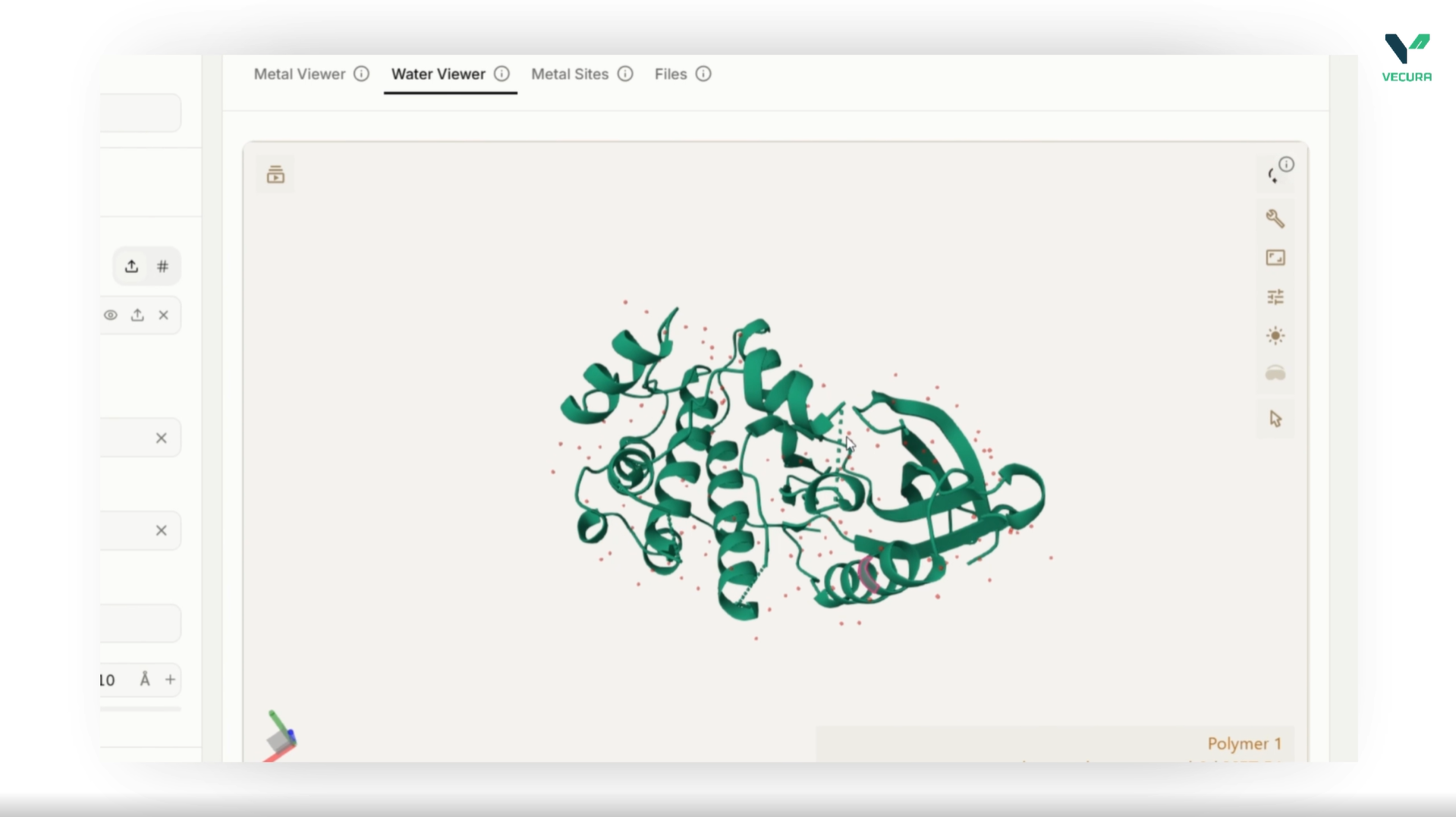
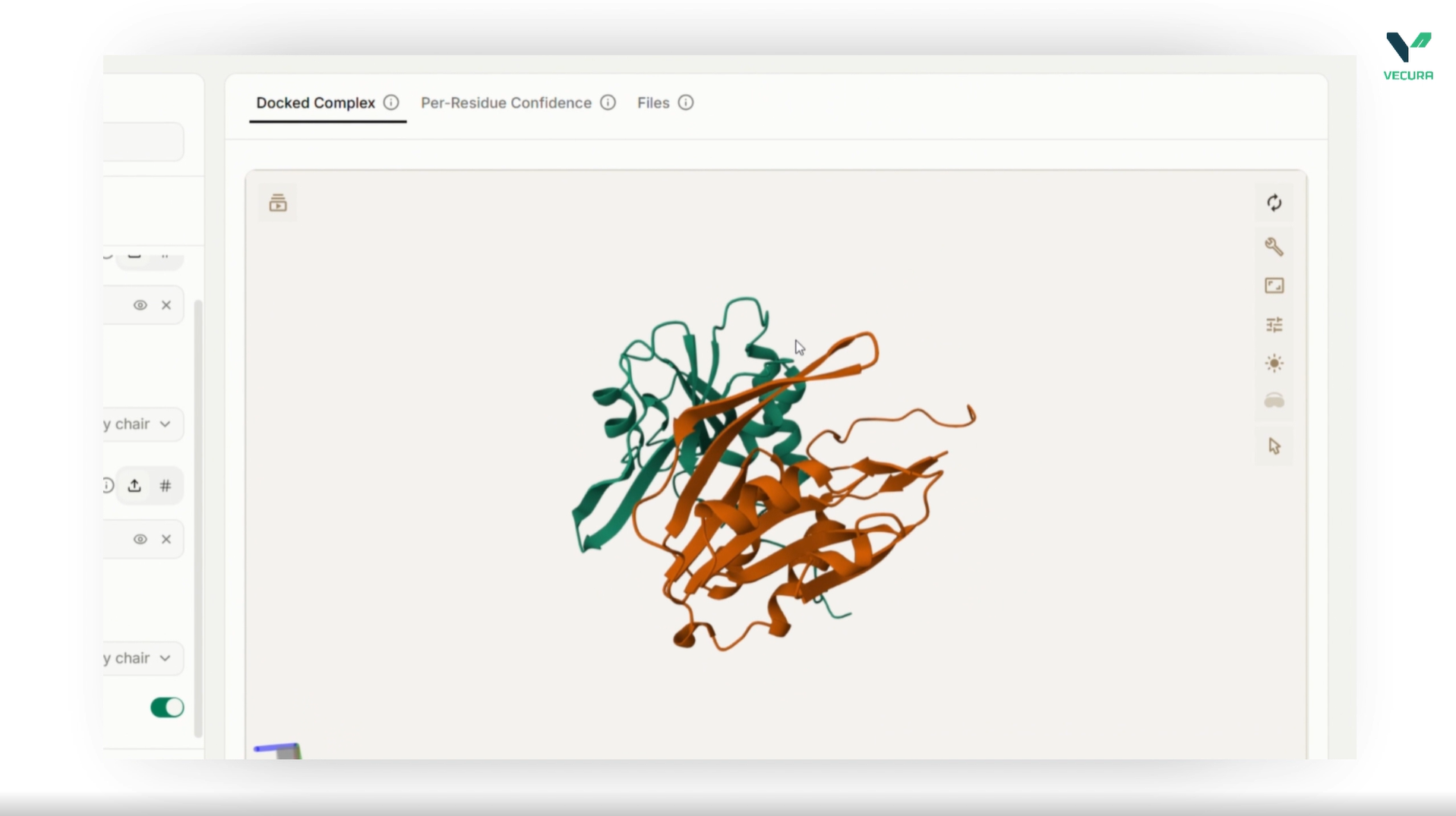
- Visualize results directly in the browser using integrated 3D viewers (e.g., Mol*) by loading the annotated cavity point-cloud output alongside the input structure.
What the output means
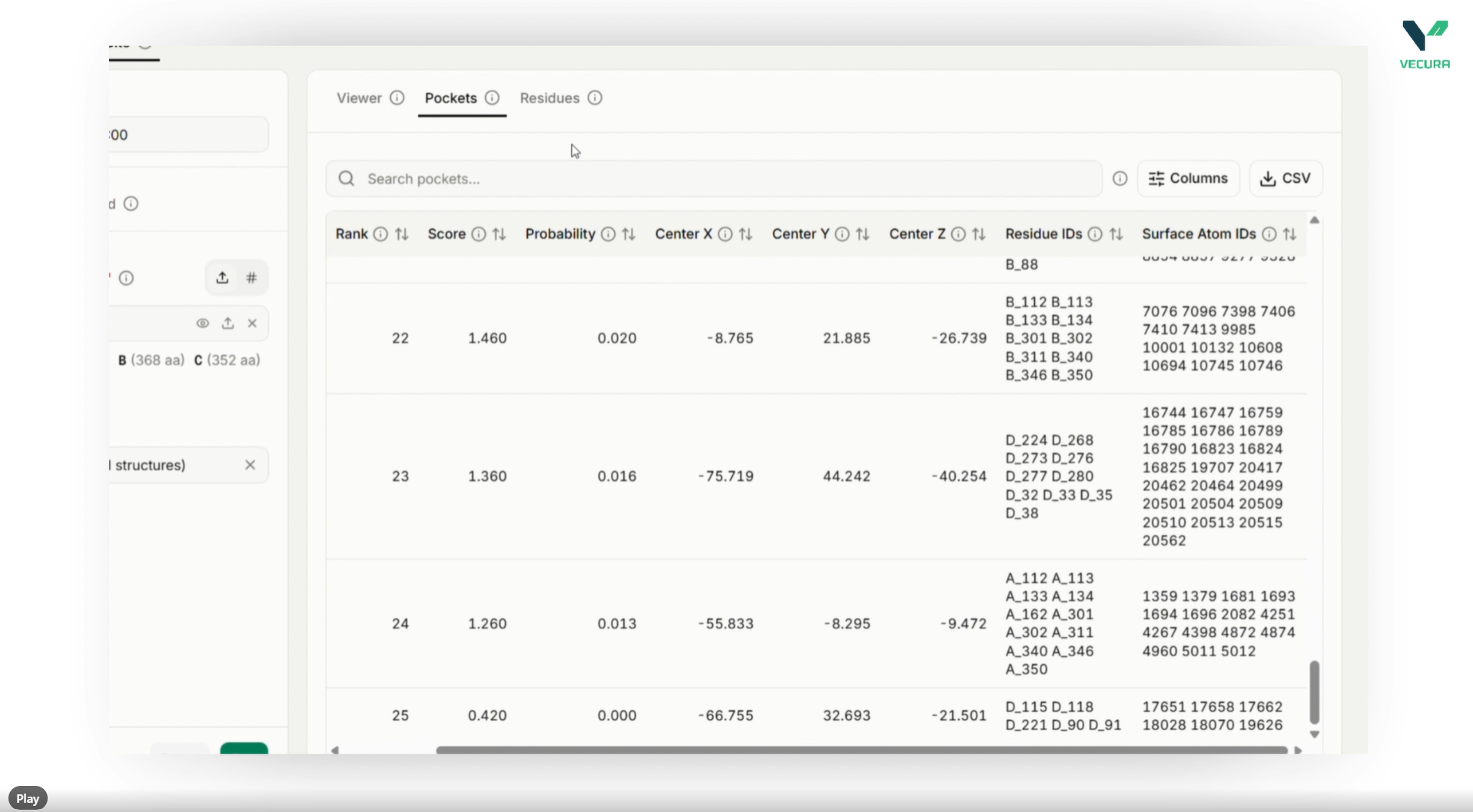
The output provides a detailed, structured report containing the number of detected cavities (ncav), their individual volumes (volume) and surface areas (area), the list of interface residues (residues), depth profiles (max_depth, avg_depth), and hydropathy averages (avg_hydropathy). It also includes a ready-to-visualize PDB-formatted string (cavity_pdb_string) representing the cavity geometry.
This output should be used to support scientific decision making—for example, selecting the most druggable pocket for docking studies or identifying conserved hydrophobic residues for mutagenesis. It does not replace experimental validation such as X-ray crystallography or binding assays.
Why this matters
Accurate identification and characterization of binding cavities is a foundational step in modern structure-based drug discovery. Traditional methods often rely on manual inspection or less rigorous geometric heuristics, which can miss subtle or transient pockets. pyKVFinder’s dual-probe algorithm, grounded in rigorous solvent-exclusion principles, offers a more physically realistic and reproducible approach to cavity detection.
Its integration into Vecura democratizes access to this state-of-the-art methodology. Researchers without Python expertise or access to high-performance computing resources can now leverage the same tools used in peer-reviewed publications—like the analysis of the SARS-CoV-2 ADRP substrate-binding site—to accelerate their own projects, fostering faster hypothesis generation and more robust computational workflows.
- Developed by: Laboratory of Bioinformatics and Computational Biology (LBC-LNBio)
- Source: Official GitHub repository and documentation
- Reference: https://github.com/LBC-LNBio/pyKVFinder, https://lbc-lnbio.github.io/pyKVFinder/
在 Vecura 上试用 pyKVFinder
打开模型工作区,用您自己的输入开始评估