ADAPT is now available on Vecura
This update enables researchers and immunotherapy developers to design custom T cell receptors and antibodies through a guided workflow inside Vecura, without setting up complex computational infrastructure.
What is ADAPT?
ADAPT (Antigen-receptor Design Against Peptide-MHC Targets) is a structure-based deep learning pipeline that designs T cell receptors (TCRs) and antibodies engineered to bind specific peptide-MHC complexes. It combines a fine-tuned AlphaFold2 docking protocol, ProteinMPNN sequence redesign, and optional RFantibody-based scoring to generate and refine immunoreceptor candidates with programmable antigen specificity. It helps users rationally design candidate sequences that can directly guide synthesis and testing, reducing the experimental burden of large-scale screening. It is especially useful for cancer immunotherapy development, vaccine research, and creating immunodetection reagents.
What can users do with ADAPT on Vecura?
With ADAPT on Vecura, users can:
-
Design novel TCRs against specific peptide-MHC targets from scratch
-
Generate antibody binders for peptide-MHC complexes with programmable specificity
-
Iteratively optimize and refine pools of TCR or antibody candidates to improve binding quality
-
Rank and select the best designs using composite scoring metrics based on predicted binding strength and specificity
What the output means
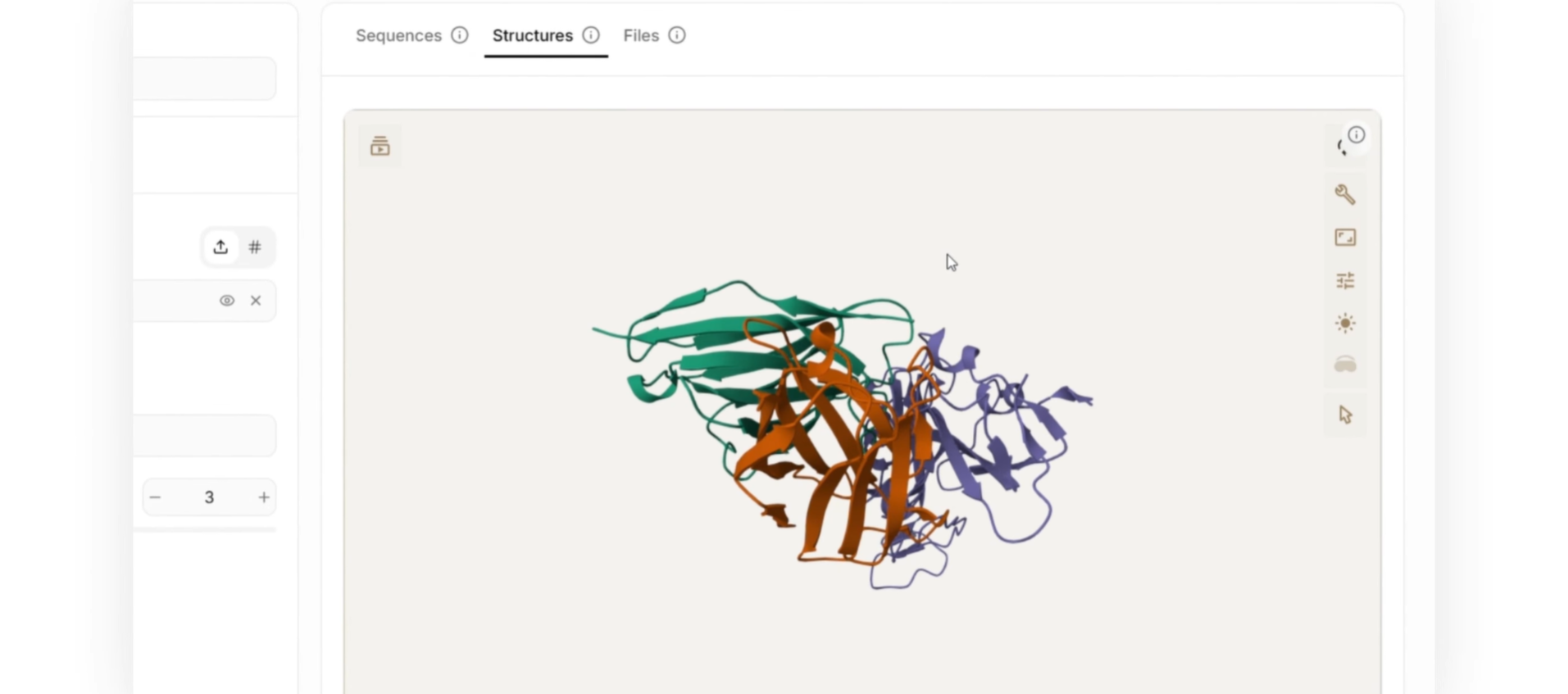
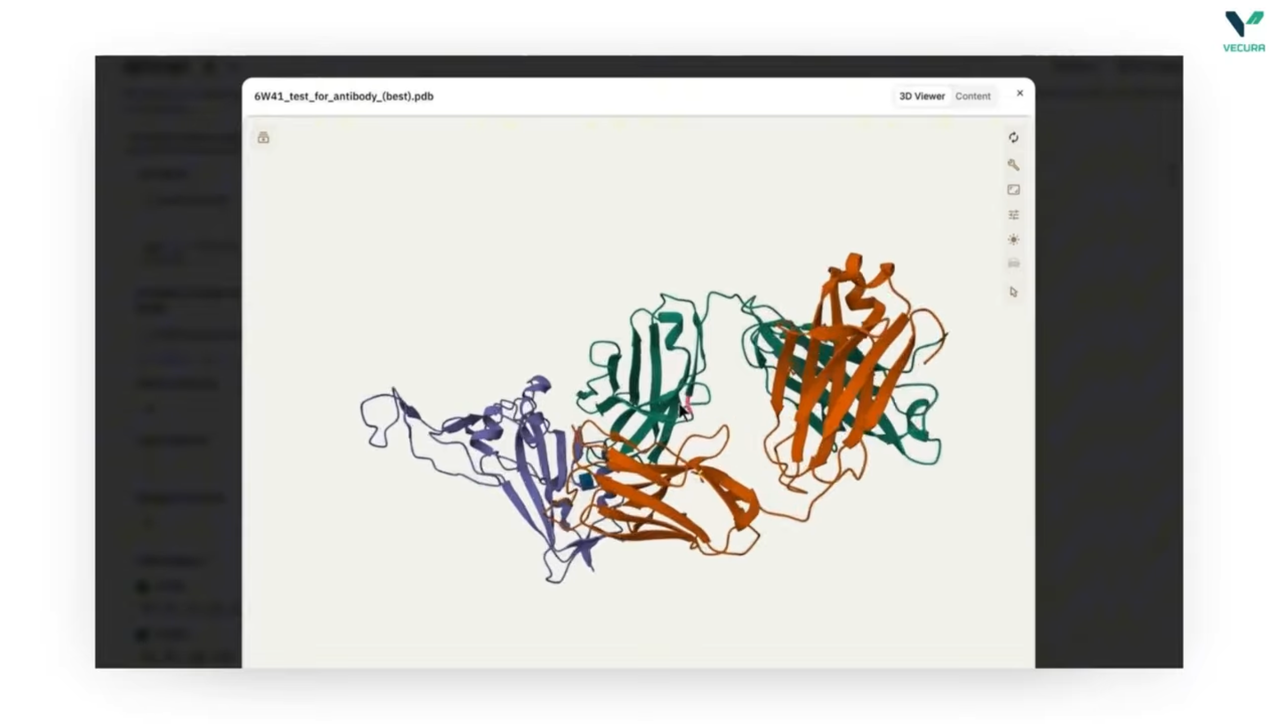
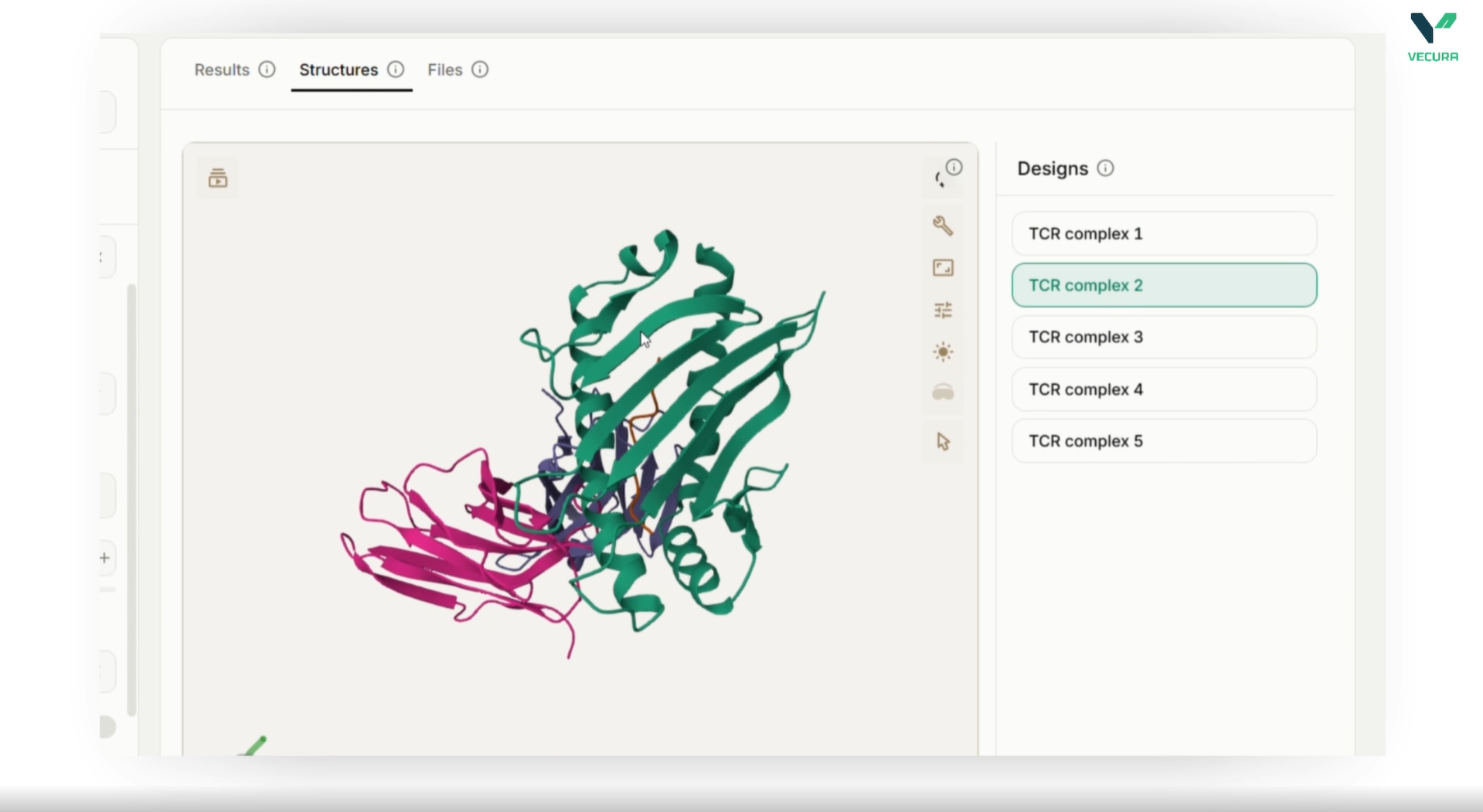
The output provides a ranked TSV table of designed complexes with per-chain sequences, CDR loop sequences, AlphaFold2 quality scores (PAE metrics), composite ranking scores, and optional RFantibody statistics. Each design includes predicted 3D PDB structures showing the receptor bound to the target pMHC. Lower PAE and combo scores indicate better predicted binding.
This output should be used to support scientific decision making. It does not replace experimental validation.
Why this matters
The rational design of immunoreceptors with programmable antigen specificity has historically required large-scale experimental screening, making it time-consuming and resource-intensive. ADAPT enables in silico design of candidate sequences that can directly guide synthesis and testing, dramatically reducing the experimental burden and accelerating the development pipeline.
Cryo-EM structures of ADAPT-designed antibodies bound to their pMHC targets have confirmed atomic-level accuracy, demonstrating that computational predictions can reliably guide the creation of functional immunoreceptors. This capability opens new directions for cancer immunotherapy, vaccine development, and the creation of precision diagnostic reagents.
-
Developed by: Motmaen, Bradley, Baker, and Garcia
-
Source: bioRxiv preprint, GitHub repository, Zenodo data
-
Reference: https://www.biorxiv.org/content/10.1101/2025.11.19.689381v1
在 Vecura 上试用 ADAPT
打开模型工作区,用您自己的输入开始评估