Molecular Docking on Vecura: Models, Methods & Use Cases
Every drug begins as a question: does this molecule fit? Molecular docking answers that question computationally by predicting how a small molecule, peptide, or protein settles into a binding site and estimating how tightly it holds. What once required weeks of crystallography or biochemical assay can now be explored in minutes, at scale, before a single compound is synthesized.

Molecular Docking on Vecura: Models, Methods & Use Cases
Introduction
Every drug begins as a question: does this molecule fit? Molecular docking answers that question computationally by predicting how a small molecule, peptide, or protein settles into a binding site and estimating how tightly it holds. What once required weeks of crystallography or biochemical assay can now be explored in minutes, at scale, before a single compound is synthesized.
Vecura brings together the full spectrum of docking technology, from the battle-tested AutoDock Vina engine to cutting-edge diffusion and flow-matching generative models, in a single, unified platform. Whether you are screening a million-compound library, refining a lead series, or mapping a protein-protein interface, the right docking tool is one click away.
Background
Molecular docking is a computational method that predicts the preferred orientation and binding energy of one molecule (the ligand) when it binds to a second molecule (the receptor, typically a protein) [1]. The process involves two coupled problems: pose sampling — searching the conformational and translational space of the ligand within the binding pocket — and scoring — estimating the free energy of binding for each sampled pose to rank candidates [1].
Scoring functions fall into four broad families:
-
Force-field-based — sum of van der Waals, electrostatic, and torsional terms derived from molecular mechanics.
-
Empirical — regression-fitted terms (H-bonds, hydrophobic contacts, rotatable bonds) calibrated against experimental affinities.
-
Knowledge-based — statistical potentials derived from the frequency of atom-pair contacts in structural databases.
-
Machine/deep learning — convolutional neural networks (CNNs), graph neural networks (GNNs), or diffusion models trained end-to-end on protein–ligand complex data [1, 2].
Modern workflows increasingly combine these approaches — using classical engines for rapid pose generation and ML models for high-accuracy rescoring [2, 3].
Why Does It Matter?
Drug discovery is expensive and slow: bringing a single new medicine to market costs an estimated $1–2 billion and takes over a decade. Molecular docking compresses the early-stage hit-identification and lead-optimization phases dramatically [1, 2]:
-
Virtual screening of millions of compounds against a target can be completed in hours on modern hardware, replacing or prioritizing wet-lab high-throughput screening.
-
Lead optimization uses docking to rationalize SAR, predict the effect of substituent changes, and guide medicinal chemistry decisions before synthesis [3].
-
Mechanism elucidation — docking reveals which residues a ligand contacts, explaining selectivity, resistance mutations, and off-target effects.
-
Drug repurposing — existing approved drugs can be rapidly screened against new targets, a strategy that proved critical during the COVID-19 pandemic [1].
Beyond small-molecule drug discovery, docking is central to protein–protein interaction (PPI) modulation, peptide therapeutics, antibody–antigen interface mapping, food science (flavour–receptor interactions), and agrochemical design [2].
The integration of docking with machine learning, AlphaFold-predicted structures, and molecular dynamics simulations is redefining the predictive power and clinical relevance of the field [1, 2, 3].
Molecular Docking Models on Vecura
| Use Case | Model | Why |
| High-Throughput Virtual Screening | ||
| First-pass large library screen | AutoDock-Vina | Gold-standard open-source engine; gradient-optimization search, well-validated empirical scoring, extremely fast and reproducible across thousands of targets. |
| Improved minimization / custom scoring | smina | Vina fork with better energy minimization to convergence and support for custom scoring functions and multiple ligand formats. |
| CNN-enhanced screening | gnina | smina fork with CNN-based scoring and pose refinement; better pose quality and enrichment than Vina at modest extra cost. |
| Accurate Pose Prediction & Cross-Docking | ||
| Blind docking (no predefined box) | DiffDock | Diffusion-based generative model; predicts a pose distribution without requiring a box definition, making it well-suited for blind docking when the site is unknown |
| Cross-docking with a reference ligand | SigmaDock | Fragment-based SE(3) diffusion model; accepts an optional reference SDF to anchor the pocket — ideal for homologous cross-docking campaigns. |
| Pose + affinity in one call | FlowDock | Geometric flow-matching model; accepts sequence or PDB template + SMILES and outputs 3-D complex with integrated affinity estimate. |
| Binding Affinity Prediction & Rescoring | ||
| GNN rescoring of a docked library | PandaDock | SE(3)-equivariant GNN rescorer; Pearson R = 0.88 on PDBbind; exposes universal rescorer and per-complex pKd prediction. |
| Post-docking bioactivity prediction | DTIGN | Predicts pKi / pKd / pIC50 directly from a docked complex; converts raw docking scores into interpretable bioactivity units. |
| Target fishing / polypharmacology | LigTMap | Ligand similarity + PSOVina docking + ML scoring across 17 target classes (6,000+ proteins); identifies likely targets and predicts affinity. |
| Protein–Protein Docking | ||
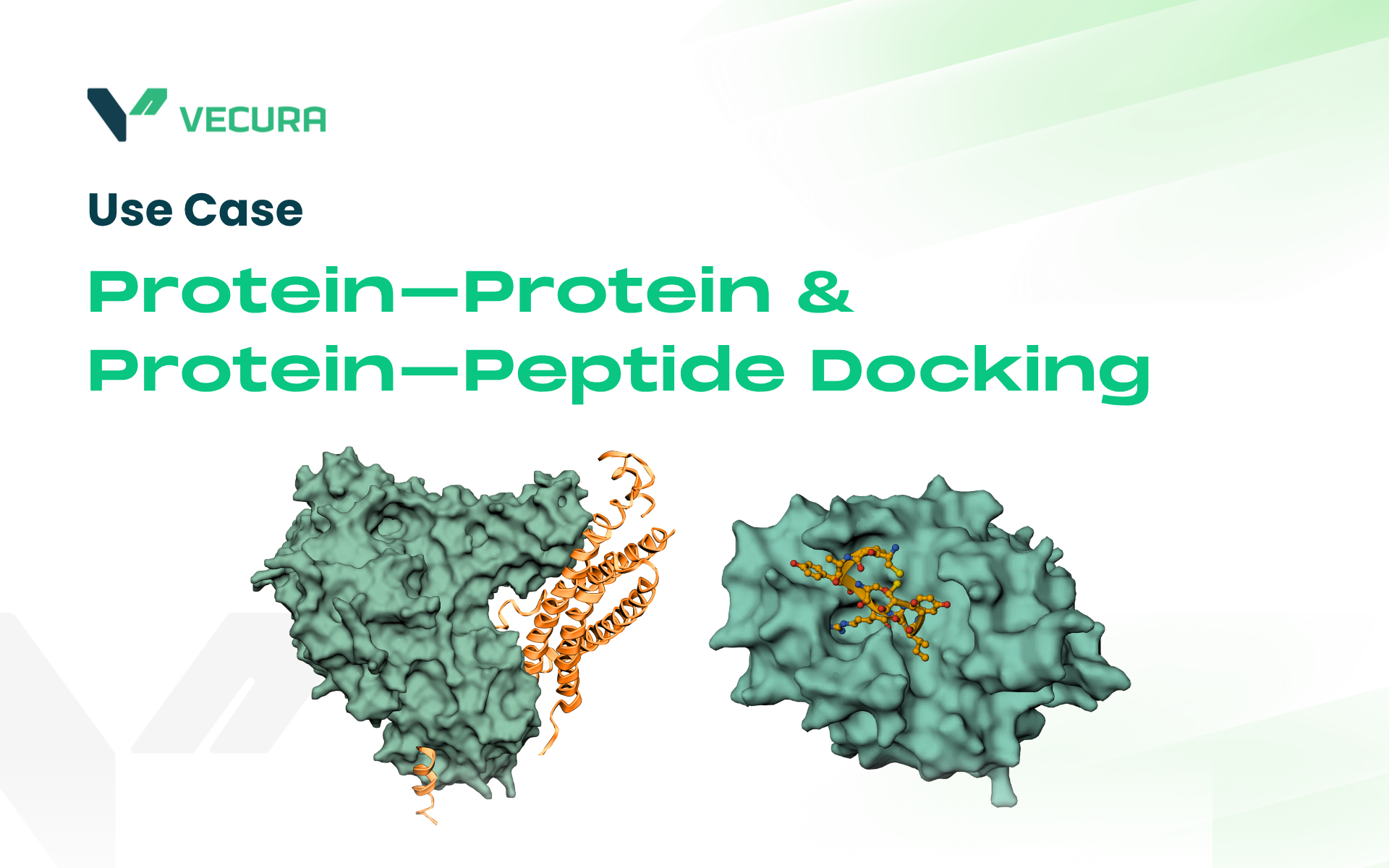
| Rigid PPI docking | EquiDock | SE(3)-equivariant end-to-end rigid-body PPI docking (ICLR 2022); fast and geometry-aware. |
| Unified sampling + ranking | DFMDock | Diffusion model with dual output heads (force prediction + energy ranking); strong on both pose quality and ranking. |
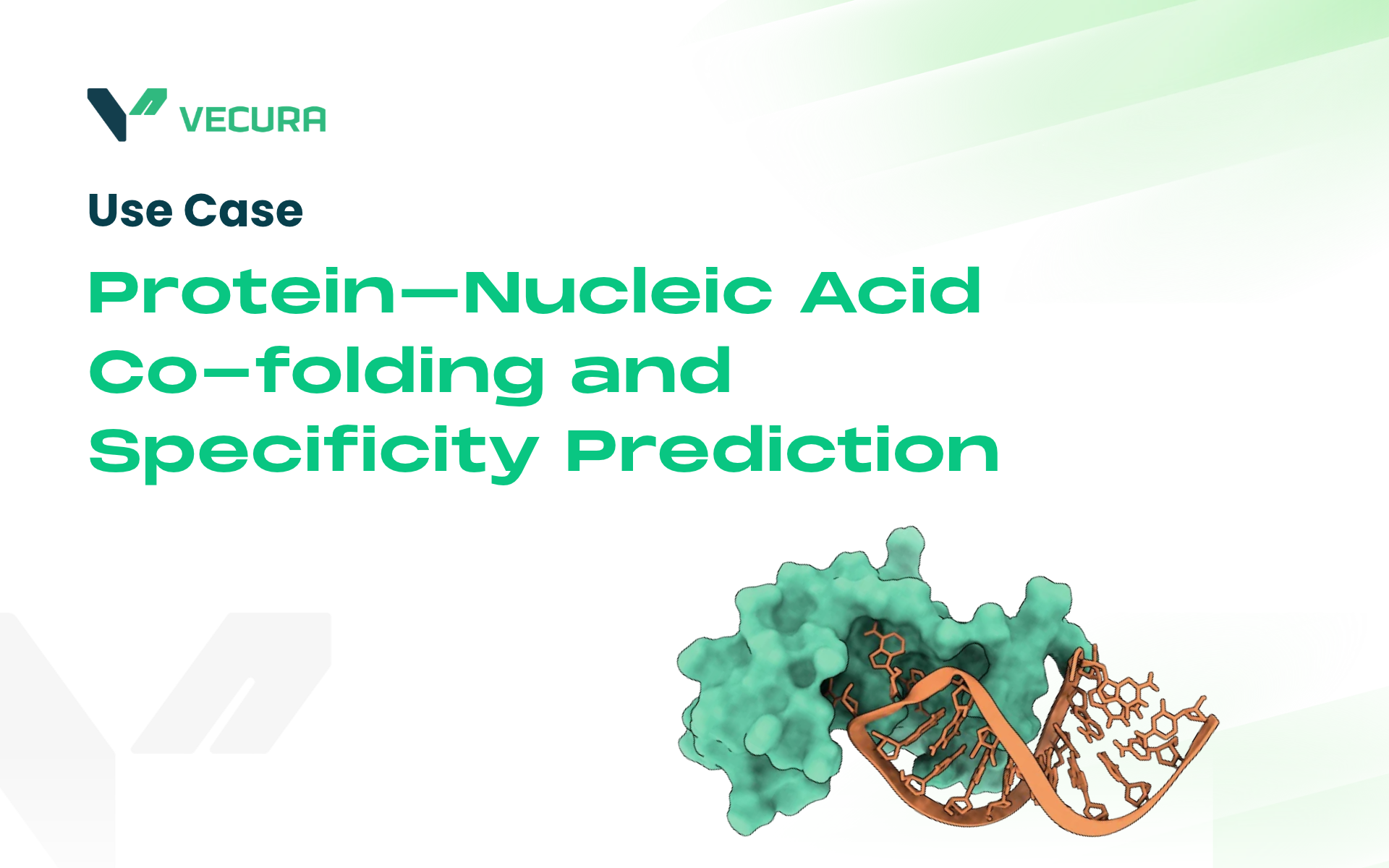
| Peptide / DNA partners or restraints | LightDock | GSO-based framework supporting protein–protein, protein–peptide, and protein–DNA docking with residue-level restraints. |
| Experimentally guided docking | ColabDock | Integrates HDX-MS / cross-linking / mutagenesis restraints into AlphaFold2-Multimer to produce ranked complex structures. |
| PPI affinity scoring | PPAP | ESM2-3B embeddings + interfacial contact-aware attention; predicts −ΔG and Kd from a PDB complex. |
| Pocket Identification | ||
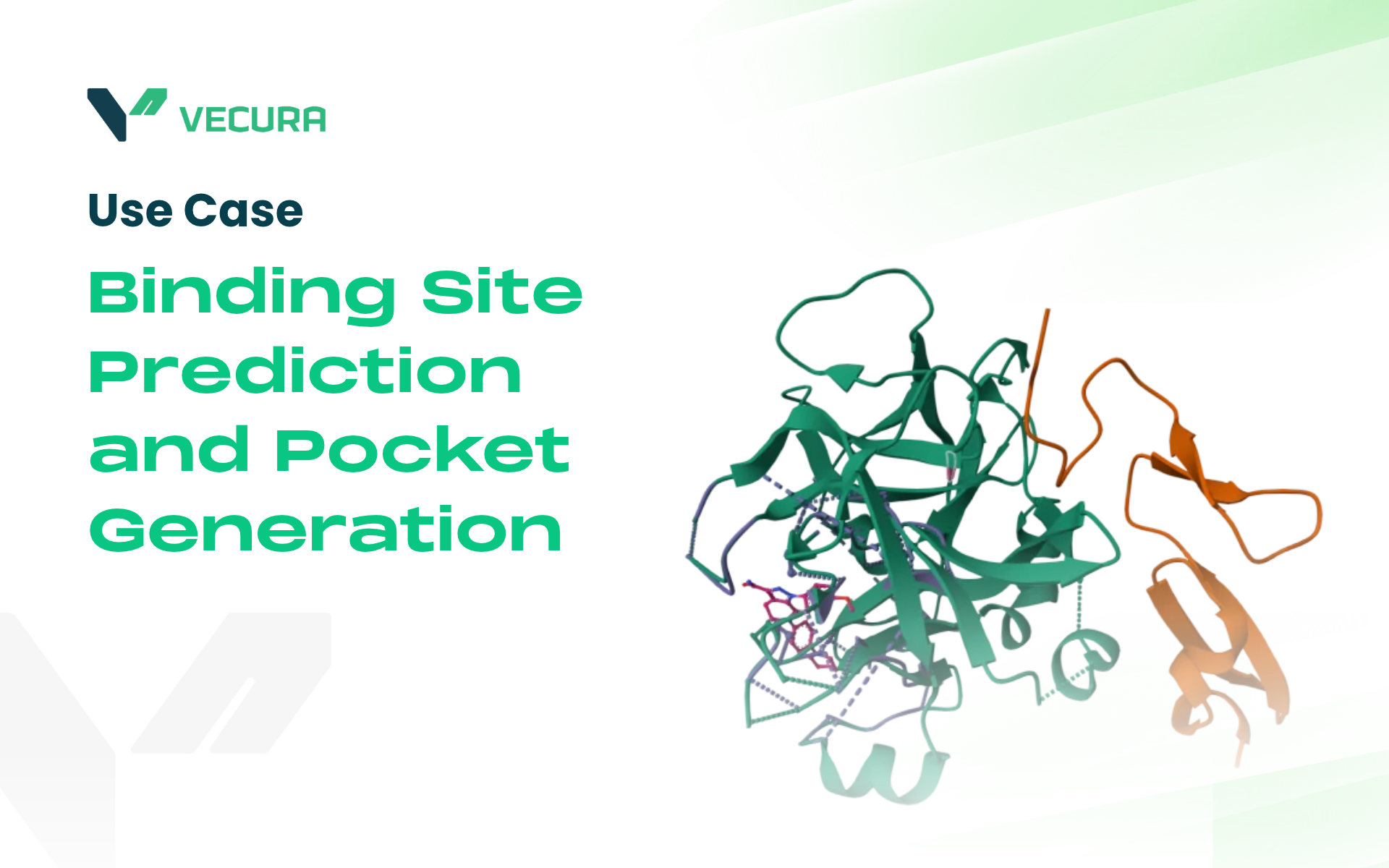
| Druggable site detection (pre-docking) | FPocket (built-in) | Detects and ranks binding pockets by druggability score; available via the pocket auto-detection button in any docking form. |
*This update is of 18 June, 2026. Vecura’s library of models will continue to grow.
Notes
-
No single model wins universally: chain classical engines for speed with deep-learning models for accuracy and affinity rescoring.
-
Receptor preparation (protonation, missing loops, hydrogens) impacts results as much as model choice; always prepare your structure first.
-
Docking scores are relative, not absolute. Interpret them against a reference ligand or calibrated benchmark, and validate top hits experimentally.
-
Classical models treat the receptor as rigid; for flexible targets (kinases, GPCRs), consider ensemble docking or follow up with molecular dynamics.
-
Deep-learning models like DiffDock support blind docking without a predefined box, ideal when the binding site is unknown.
Conclusion
Molecular docking has evolved from a niche computational curiosity into an indispensable pillar of modern drug discovery and structural biology. The convergence of classical physics-based engines with deep-learning generative models — diffusion, flow-matching, equivariant GNNs — has dramatically improved pose accuracy, affinity prediction, and applicability to previously intractable targets [1, 2, 3].
Vecura consolidates this entire landscape into one platform: from rapid million-compound virtual screens with AutoDock-Vina, to blind pose prediction with DiffDock, to protein–protein interface mapping with EquiDock and ColabDock. Researchers can move seamlessly from pocket identification through docking, rescoring, ADMET profiling, and molecular dynamics — all without leaving the platform.
As AI-driven docking continues to mature, the bottleneck shifts from computation to experimental validation and data quality. Vecura's integrated pipeline — combining the best models with curated public data and ADMET screening — is designed to make that transition as efficient as possible.
References
[1] Classical Docking to Machine Learning Based Docking: Molecular Docking in Drug Discovery.
https://doi.org/10.2174/0115680266424314251204071847
[2] Integrative Computational Chemistry Approaches in Modern Drug Discovery: Advances in Docking, Pharmacophore Modeling, Molecular Dynamics, and Virtual Screening.
https://doi.org/10.3390/pharmaceutics18050565
[3] Innovative Integration of Molecular Docking and Machine Learning for Drug Discovery: From Virtual Screening to Nanomolar Inhibitors.