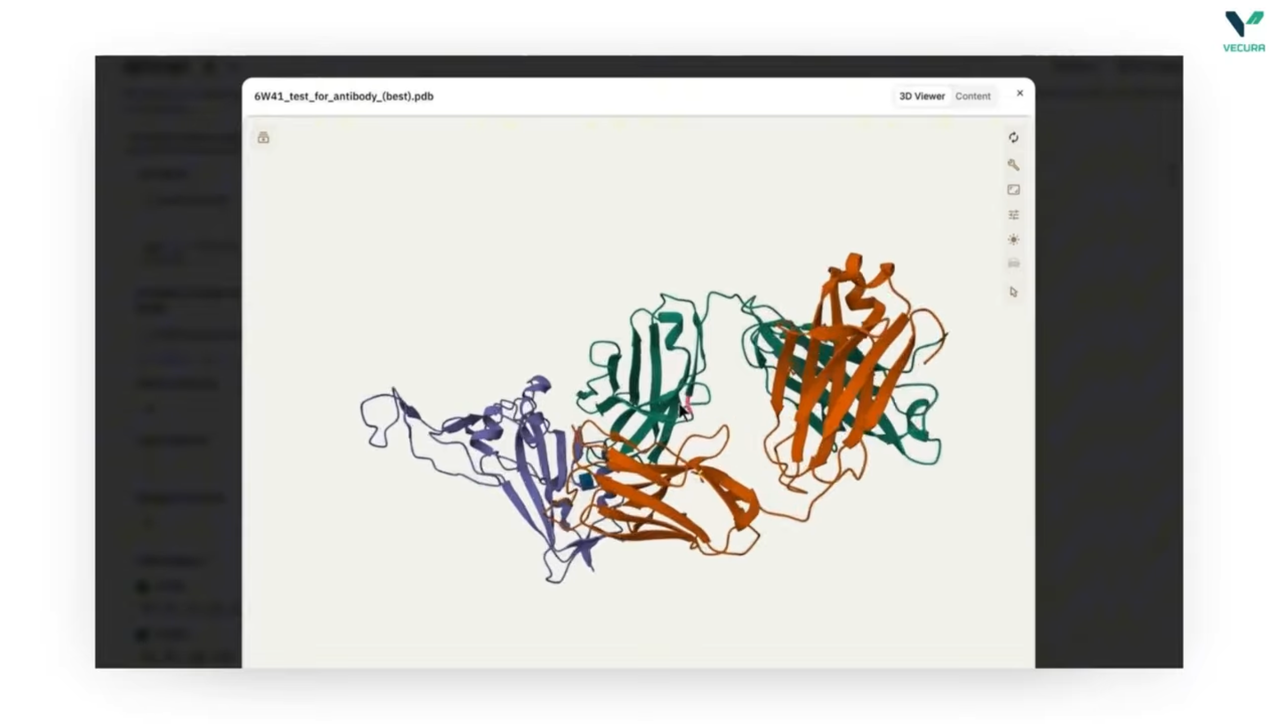
Accelerate Your Protein Design Workflow with ProteinMPNN (NIM) on Vecura
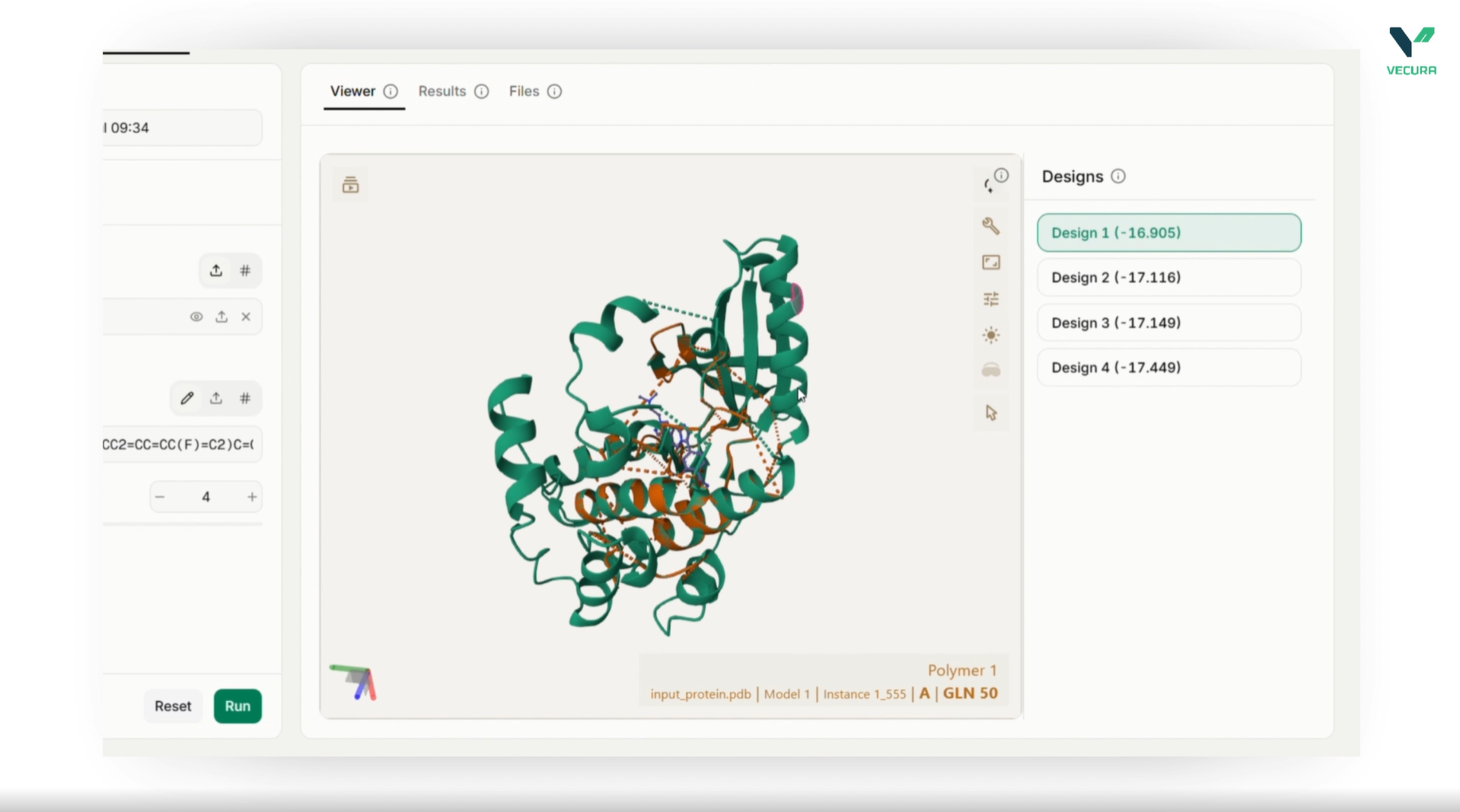
This update enables researchers and protein engineers to design novel amino acid sequences for custom protein structures through a guided workflow inside Vecura, eliminating the need to manage complex, resource-heavy technical infrastructure.
What is ProteinMPNN (NIM)?
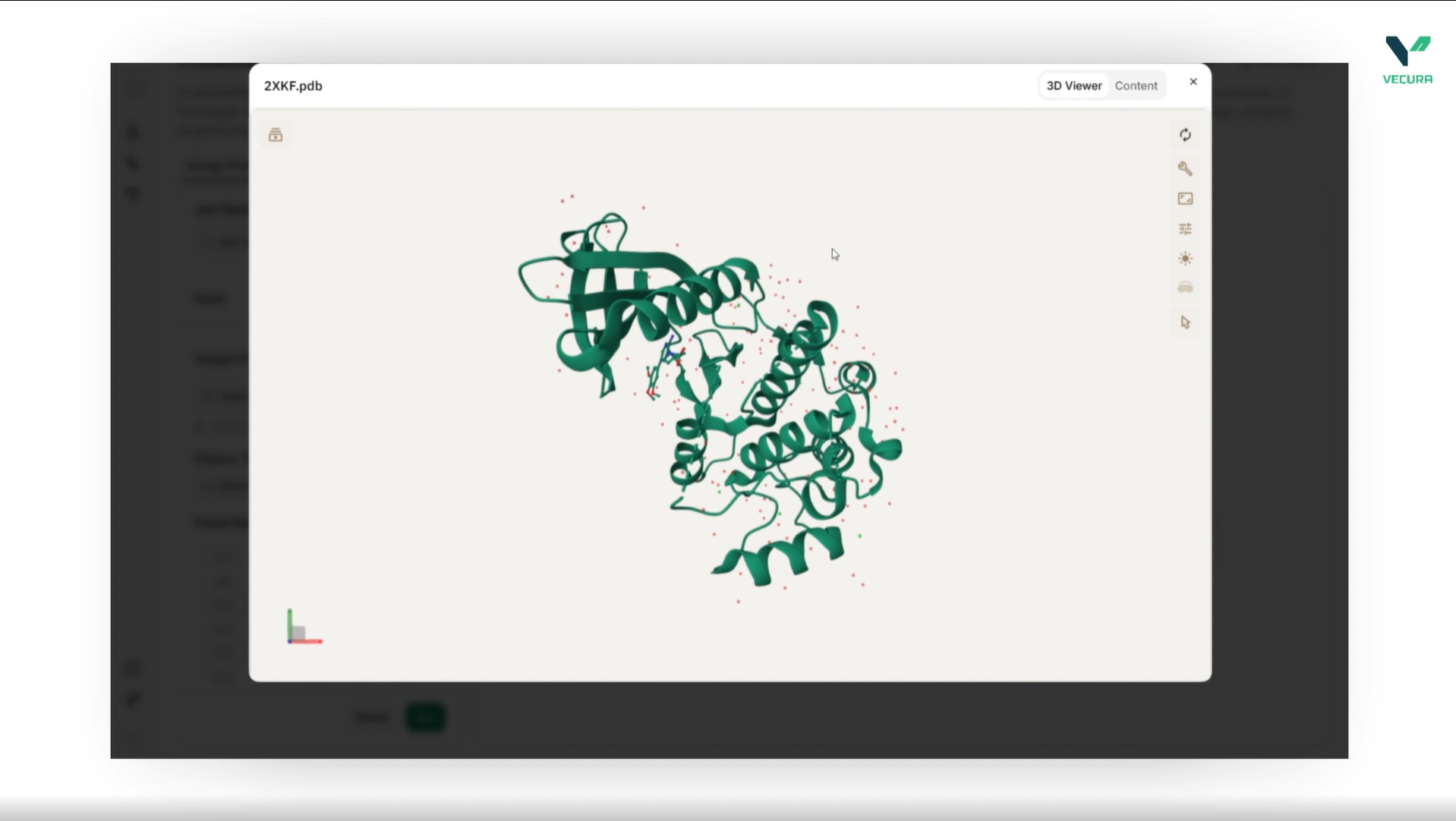
ProteinMPNN is a sophisticated graph neural network designed to solve the inverse protein folding problem: predicting amino acid sequences that are likely to fold into a specific 3D backbone structure. By leveraging evolutionary, structural, and functional data, it enables the generation of sequences tailored for precise protein architectures. It is an essential tool for de novo protein design, enzyme engineering, and the development of therapeutic proteins.
What can users do with ProteinMPNN (NIM) on Vecura?
With ProteinMPNN (NIM) on Vecura, users can:
-
Generate novel amino acid sequences optimized for custom-designed protein backbones.
-
Perform high-throughput sequence sampling to explore a vast space of potential protein variants.
-
Fine-tune sequence design using evolutionary constraints via PSSM (Position-Specific Scoring Matrix) integration.
-
Apply site-specific constraints, such as fixing certain residues or omitting specific amino acids, to meet precise experimental requirements.
What the output means
The output provides a multi-FASTA file containing designed amino acid sequences along with critical metrics such as per-sequence negative log-likelihood scores. These scores help researchers gauge the confidence of each design.
It is important to note that while these sequences are predicted to adopt the target structure, this output should be used to support scientific decision-making and does not replace subsequent experimental validation or structure verification using tools like AlphaFold2 or ESMFold.
Why this matters
The ability to accurately predict sequences for a target structure is a cornerstone of modern synthetic biology. ProteinMPNN (NIM) significantly lowers the barrier for computational protein design, allowing researchers to move beyond natural proteins to engineer functional molecules with optimized stability and specificity. By integrating this powerful model into a streamlined platform, scientists can accelerate the development of innovative therapeutics and biocatalysts.
-
Developed by: Institute for Protein Design, University of Washington
-
Source: Official GitHub Repo / NVIDIA NIM Model Card
-
Reference: Dauparas et al., Science 2022
Try ProteinMPNN on Vecura.
Open the model workspace and start evaluating it with your own inputs.