AFsample3 Now Available on Vecura: Explore Protein Conformational Landscapes with AlphaFold3
This integration enables structural biologists and drug discovery researchers to generate diverse conformational ensembles of biomolecular complexes through an intuitive workflow on Vecura, eliminating the need for complex computational infrastructure setup.
What is AFsample3?
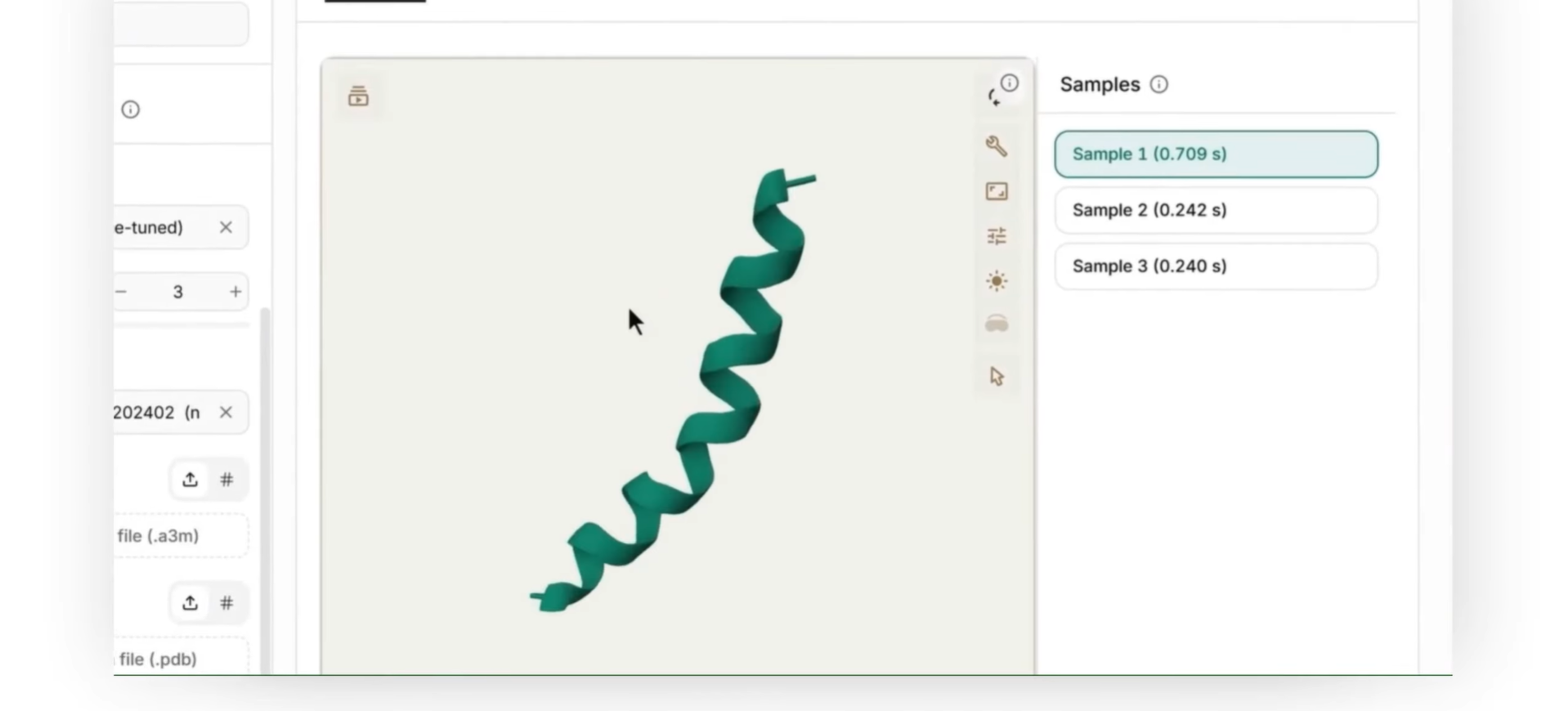
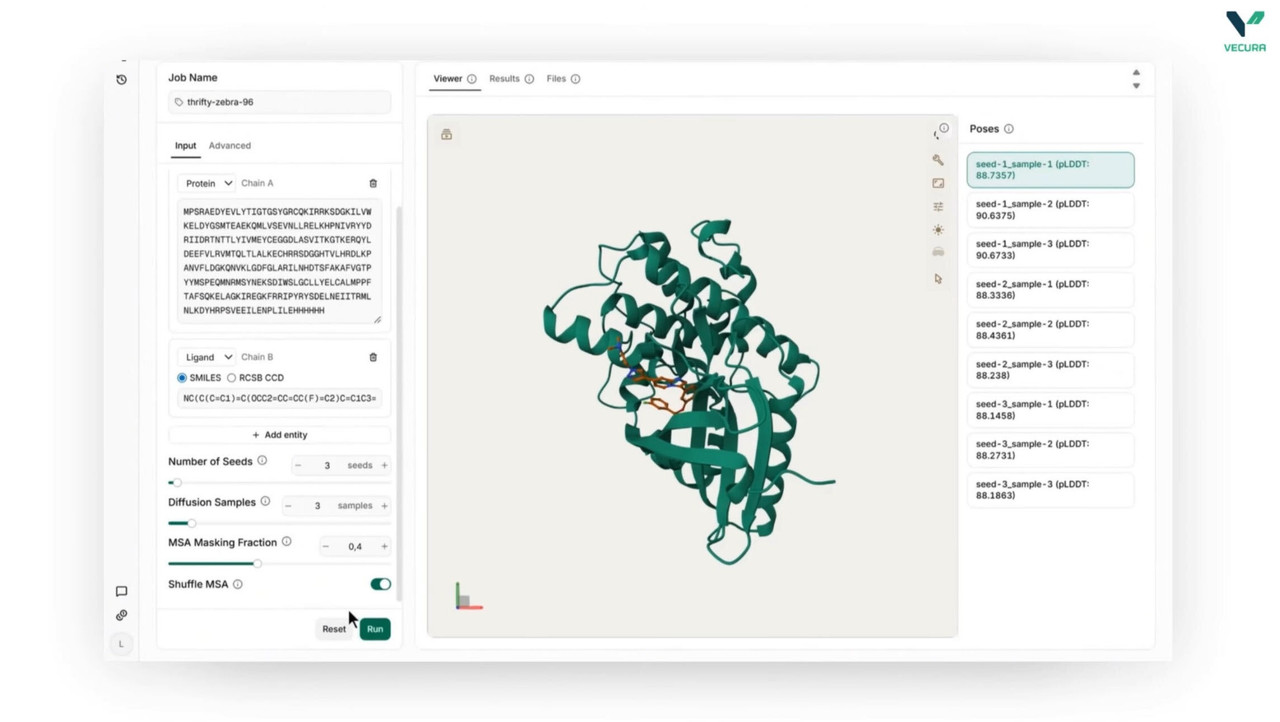
AFsample3 is an advanced sampling framework built on AlphaFold3 that generates multiple conformational states of biomolecular assemblies rather than predicting a single static structure. It works by strategically masking portions of multiple sequence alignment (MSA) data and running AlphaFold3 across numerous random seeds, creating a diverse pool of structural predictions that span the conformational landscape. The tool includes an optional Pathfinder clustering module that automatically identifies distinct conformational states from the generated ensemble without requiring reference structures.
It helps users characterize protein flexibility, sample alternative domain arrangements, and capture functionally relevant conformational states that single predictions would miss. It is especially useful for studying dynamic multi-chain complexes, protein-ligand interactions, and allosteric mechanisms where multiple structural states coexist.
What can users do with AFsample3 on Vecura?
With AFsample3 on Vecura, users can:
- Generate structurally diverse ensembles of proteins, nucleic acids, and their complexes by running AlphaFold3 with configurable MSA masking strategies
- Explore conformational flexibility across multi-chain assemblies including protein-protein, protein-RNA, protein-DNA, and protein-ligand systems
- Automatically cluster large ensembles into representative conformational states using reference-free Pathfinder analysis
- Tune sampling parameters (masking fraction, number of seeds, diffusion samples) to balance diversity and prediction confidence for their specific research questions
What the output means
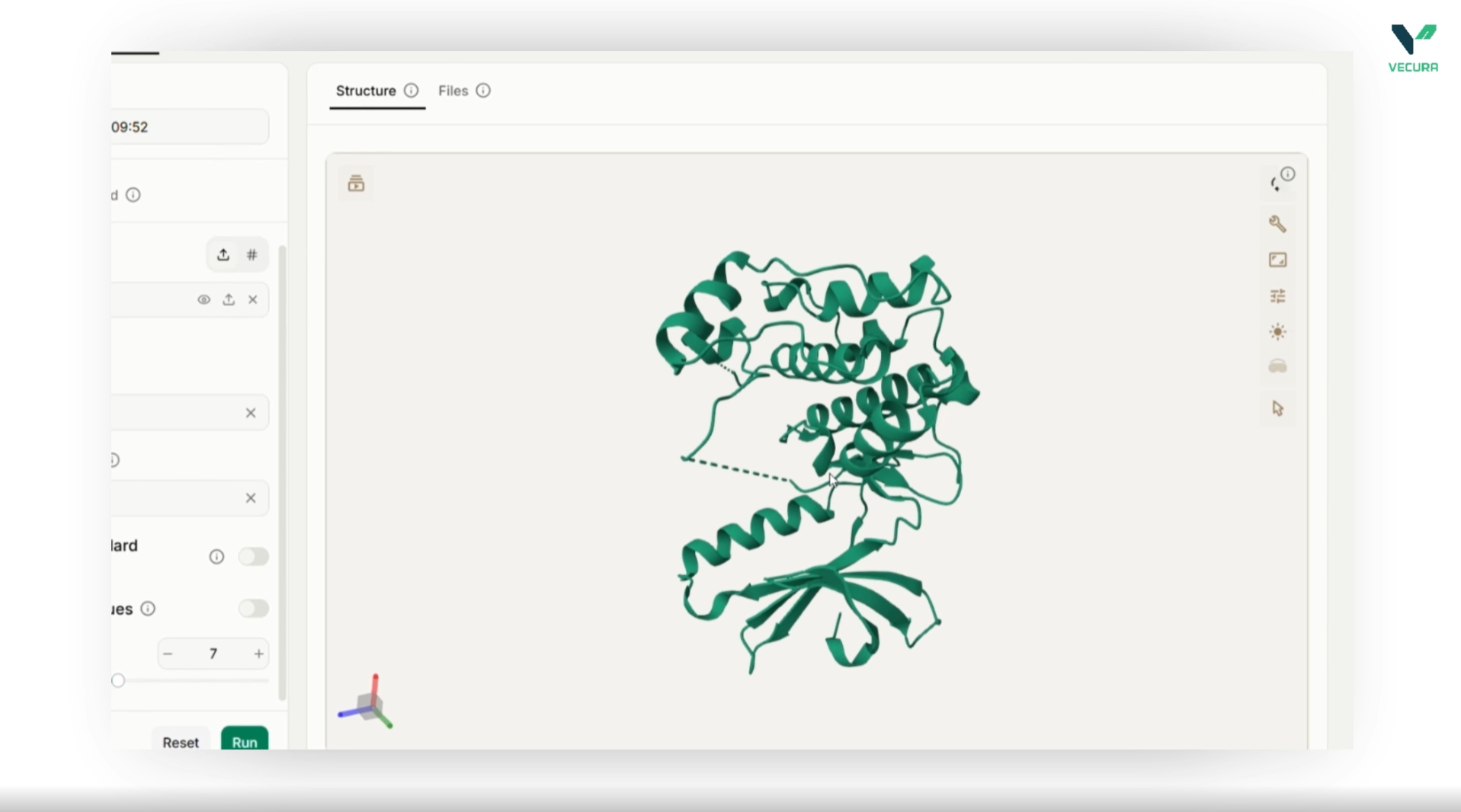
The output provides a comprehensive ensemble of predicted structures with per-model confidence scores (pLDDT), along with clustered representative states and assignment mappings. Users receive aggregate statistics including total structure count, mean and maximum confidence scores, and identification of the highest-confidence model. When Pathfinder clustering is enabled, the output includes representative structures for each distinct conformational state and a complete mapping of which ensemble members belong to each cluster.
This output should be used to support scientific decision making. It does not replace experimental validation.
Why this matters
Proteins are inherently dynamic molecules that adopt multiple conformational states to perform their biological functions. Traditional structure prediction methods, including standard AlphaFold3, typically output a single lowest-energy structure that may not represent the functionally relevant state or capture the full range of motion. Understanding conformational ensembles is critical for drug discovery, where ligands often bind to specific states, and for elucidating allosteric mechanisms where distant sites communicate through structural changes.
AFsample3 addresses this limitation by leveraging AlphaFold3's powerful diffusion-based architecture while introducing controlled stochasticity through MSA masking. This approach builds on the validated AFsample2 methodology that demonstrated significant improvements in conformational diversity recovery compared to standard AlphaFold2 sampling. By making this advanced sampling strategy accessible through Vecura's guided interface, researchers can now routinely explore the conformational landscape of their biomolecular systems of interest, generating hypotheses about alternative states and dynamic behavior that can guide experimental design and computational follow-up studies.
- Developed by: Wallner Lab (Linköping University)
- Source: GitHub repository and methodology documentation
- Reference: Kalakoti & Wallner — AFsample2 (Communications Biology, 2025); Abramson et al. — AlphaFold3 (Nature, 2024)
Try AFsample3 on Vecura.
Open the model workspace and start evaluating it with your own inputs.