Singapore biotech startup Nanyang Biologics bets on AI drug discovery platform to unlock revenue
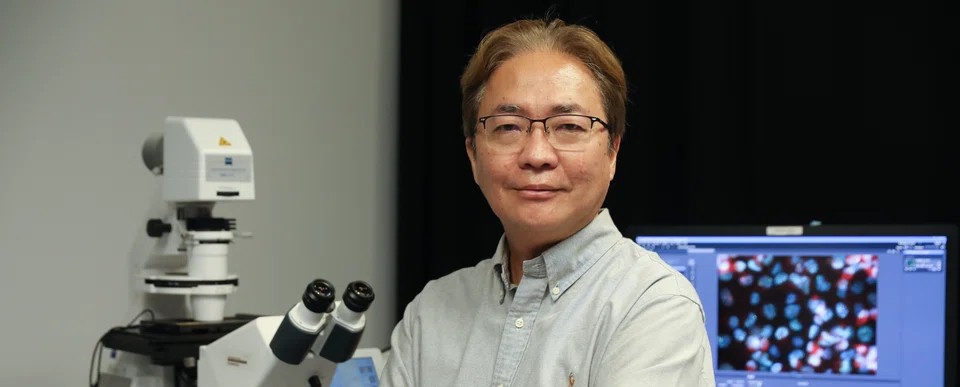
[SINGAPORE] Drug development typically takes six to 10 years just to identify a viable molecule, but Singapore biotech firm Nanyang Biologics reckons it can do the job in six minutes.
Originally founded as a biopharma startup to develop cancer and cardiovascular therapies, the company simultaneously spent six years building an artificial intelligence (AI) platform to accelerate its own drug discovery work.
Now it has commercialised that technology as NYB.AI, positioning it as a tool for pharmaceutical and health supplement manufacturers looking to slash costs and timelines.
The move has attracted significant investor interest, with Nanyang Biologics agreeing to a US$1.5 billion reverse merger with Nasdaq-listed RF Acquisition Corp II, a special purpose acquisition company (Spac). The transaction is expected to close by the second quarter of 2026.
Dr Roland Ong, founder and chairman of Nanyang Biologics, told The Business Times that listing on the Nasdaq will offer more visibility for the company, in terms of increasing its exposure to more sources of funding as well as to the global scientific and pharmaceutical communities.
“Biotech, AI and drug discovery are a long-term R&D process and continuous funding is required,” he added.
Early commercial traction
The bet appears to be paying off in other ways as well. After six years without revenue, Nanyang Biologics secured its first paying client this year – a Japanese nutraceuticals firm – and is in advanced talks with five more prospects.
In an interview with BT prior to the Spac deal, Dr Ong said that the platform should generate “single-digit millions” in US dollar revenue this year. This could potentially jump five times in 2026 once the company demonstrates a proven drug candidate entering clinical trials. It can no longer comment on revenue now that it is in the midst of the transaction.
“We believe that (having a proven drug candidate) will validate the efficiency of our AI for drug discovery platform, and this can give a boost to our business development.”To date, the firm has been funded by Dr Ong’s own capital, angel investors and venture capitalists to the tune of more than US$10 million.
The platform’s first commercial success came with its Japanese client, where it identified 15 potential drug molecules for stress management in six months, down from the six years it took Nanyang Biologics to discover four molecules using traditional methods combined with AI development.
The company also published a first-in-class drug candidate in April. First-in-class refers to drugs with entirely novel mechanisms of action, which zero in on proteins or molecules never targeted before.
“We’re able to do it because we have captured the global brains here from different parts of the world,” Dr Ong said, referring to Singapore’s diverse research talent pool at institutions such as Nanyang Technological University (NTU) and the Agency for Science, Technology and Research.
The company now holds 11 patents and intellectual property registrations for potential drug molecules.
The technology edge
Dr Ong likens NYB.AI to ChatGPT for drug discovery. “It’s like if you don’t use ChatGPT, you probably need five writers. But today, with ChatGPT, you can cut out four out of five writers.”
The startup had developed the platform for its own use, but felt that it should “spin it off so that we welcome as many researchers in the world to shorten their drug discovery”.
The platform works by analysing natural sources – plants, fungi and algae – which can contain 3,000 to 10,000 unique molecules each. It has catalogued more than 50,000 different organisms and shortlists quality drug candidates, while filtering out poor ones.
The key is in the training. Over six years, the AI learnt alongside traditional drug discovery work, capturing expertise from biology, chemistry, molecular engineering and plant genomics.
“That’s why you can reduce from six years to six minutes – essentially employing thousands of scientists from all over the world,” noted Dr Ong.
He said that the quality of training is what sets NYB.AI apart from other similar tools.
“If you train (with) rubbish, it’s going to give you rubbish. Our AI is more efficient because we consider five angles – the biologist, molecular engineer, plant genomics and so on – while another researcher with fewer resources may consider only two.”
Business model
To drive growth, Nanyang Biologics is exploring multiple revenue streams. The primary approach involves offering NYB.AI as a platform-as-a-service with partners including chip giant Nvidia, US technology multinational Hewlett Packard Enterprise and Internet services company Equinix.
For pharmaceutical companies handling confidential data, the firm can build private cloud AI solutions that sit exclusively with the client.
A third model involves shared intellectual property arrangements, where clients jointly develop drug candidates through to clinical trials, accessing both the AI platform and the company’s laboratory facilities at NTU.
Traditional drug discovery without AI costs pharmaceutical companies tens to hundreds of millions of dollars. Nanyang Biologics claims to offer approximately 90 per cent cost savings – what Dr Ong calls “a huge discount”.
He expects the company could reach break-even by end-2026 or 2027, primarily because it plans to sell discovered molecules rather than distribute them.
“We are a hub for drug discovery. We are not a hub for drug distribution,” he said.
As funds are set to come in with the Spac deal, and as the sector is seeing more interest especially around AI applications, prospects are looking bright for Nanyang Biologics.
Try Vecura now.
Bring your own inputs and start exploring what Vecura can do.